Remote Control PDLC for Car: Revolutionizing Automotive Privacy and Comfort
The rapidly evolving landscape of automotive technology, the integration of smart materials is transforming how we interact with our vehicles. One such innovation is Polymer Dispersed Liquid Crystal (PDLC) film, particularly when equipped with remote control capabilities for car applications. PDLC technology allows car windows to switch between transparent and opaque states at the touch of a button or through a remote interface, offering unprecedented control over privacy, light transmission, and thermal management. This article delves into the technical intricacies of remote control PDLC for cars, exploring its mechanisms, applications, advantages, challenges, and future prospects. As vehicles become smarter and more connected, PDLC systems represent a bridge between traditional window tinting and advanced electrochromic solutions, enhancing both functionality and user experience.
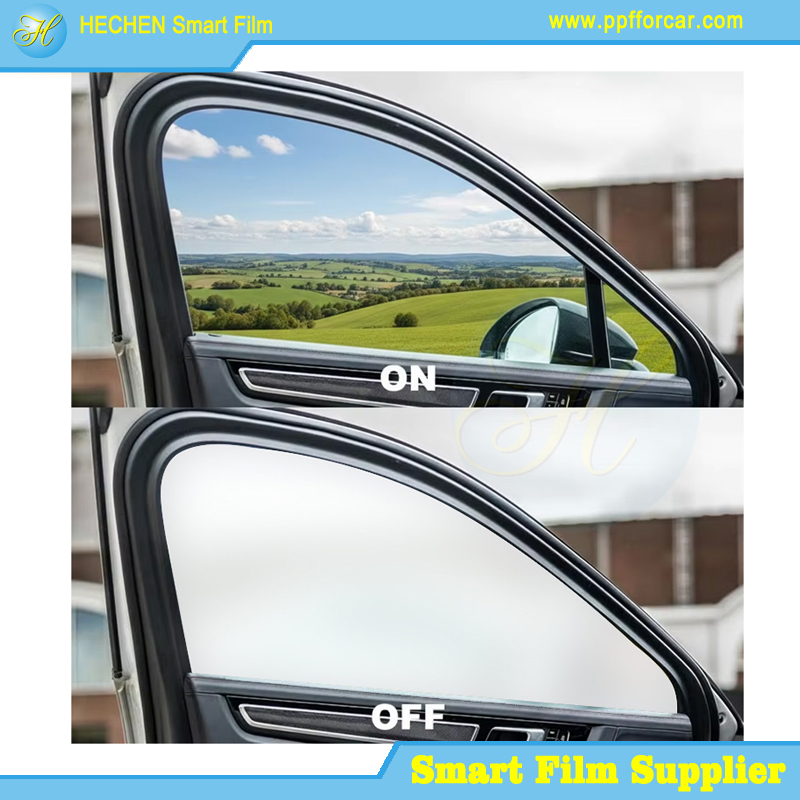
PDLC, or Polymer Dispersed Liquid Crystal, is a type of smart film that utilizes liquid crystals suspended in a polymer matrix to alter light scattering properties. When applied to car windows, it provides on-demand tinting without the permanence of traditional films. Remote control adds a layer of convenience, allowing drivers or passengers to adjust window opacity via smartphones, key fobs, or integrated vehicle systems. This technology is gaining traction in luxury vehicles and aftermarket modifications, with companies like Smart Tint and Gauzy leading the charge in commercialization.
The demand for such systems stems from increasing consumer preferences for customizable vehicle interiors, enhanced privacy in urban environments, and energy-efficient solutions in electric vehicles (EVs). According to industry reports, the automotive smart glass market is projected to grow significantly, driven by advancements in PDLC and related technologies.
This article aims to provide a comprehensive technical overview, drawing on principles from materials science, electronics, and automotive engineering.
The Fundamentals of PDLC Technology
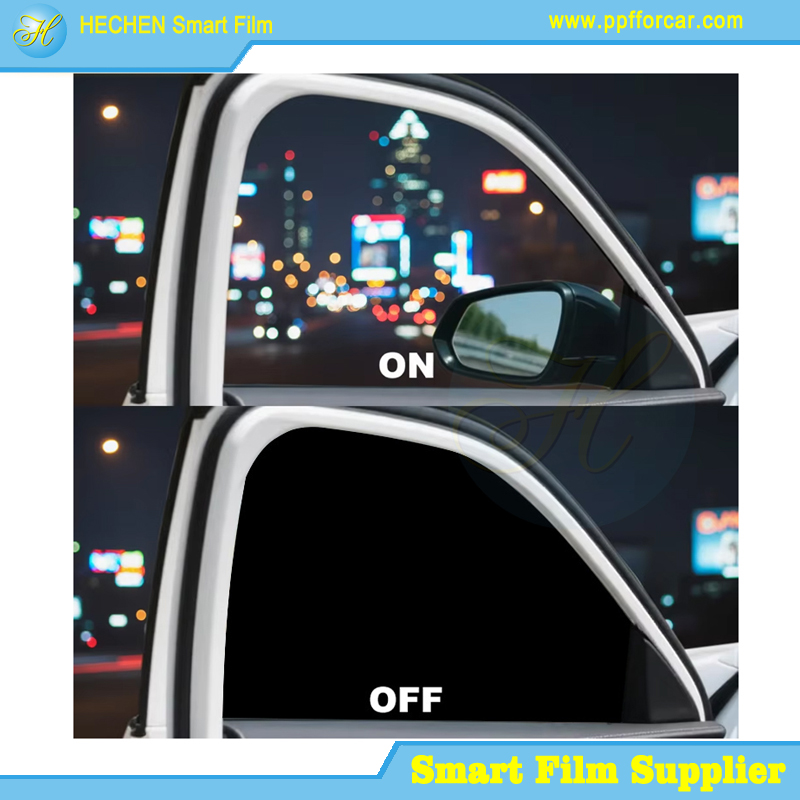
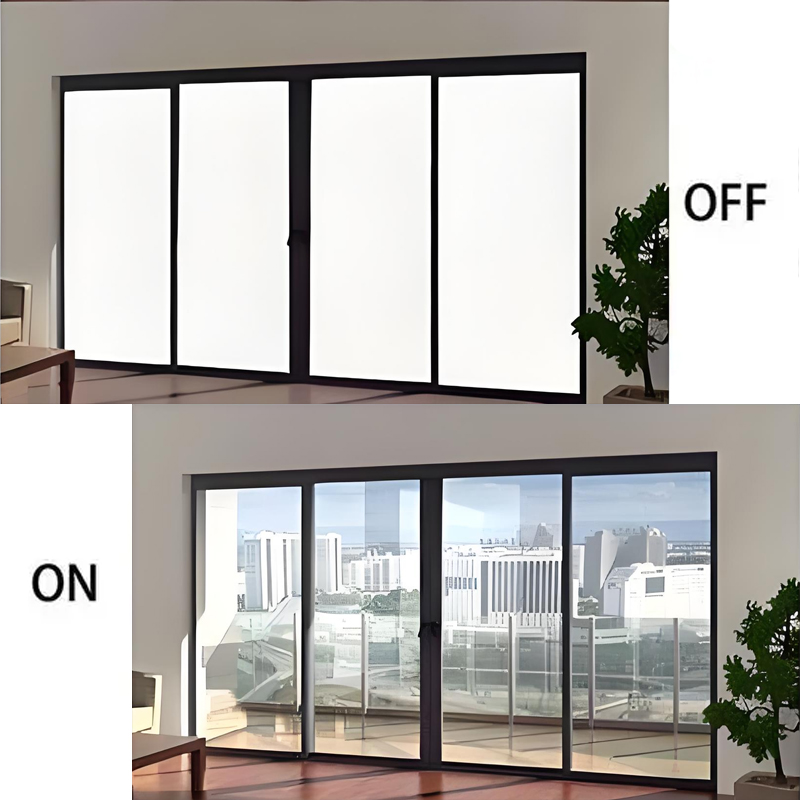
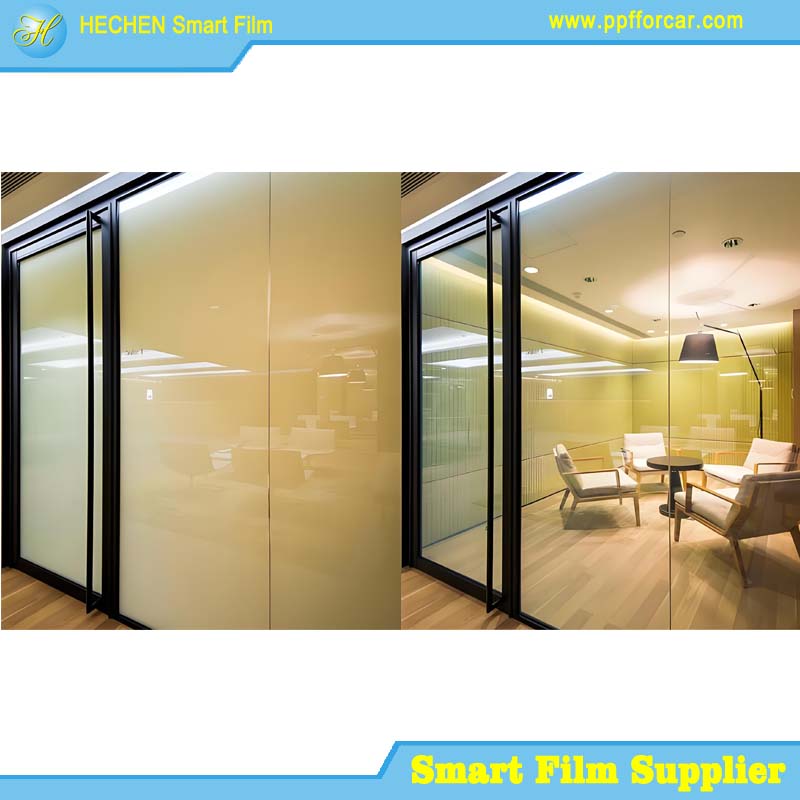
At its core, PDLC technology relies on the electro-optical properties of liquid crystals. Liquid crystals are organic compounds that exhibit properties between those of conventional liquids and solid crystals, allowing them to align under electric fields. In PDLC films, these crystals are dispersed as microscopic droplets within a polymer matrix sandwiched between two transparent conductive layers, typically made of indium tin oxide (ITO).When no voltage is applied (off state), the liquid crystal droplets are randomly oriented, scattering incoming light and rendering the film opaque or translucent. This scattering effect blocks direct visibility while still allowing diffuse light to pass through, maintaining interior illumination. Upon applying an alternating current (AC) voltage—typically 12V to 65V—the electric field aligns the liquid crystals parallel to the field direction, reducing scattering and making the film transparent. The transition occurs in milliseconds, providing instant control.
For automotive applications, PDLC films are often self-adhesive or laminated onto existing glass. The film's thickness ranges from 0.3mm to 0.5mm, ensuring minimal impact on window operation. Key parameters include transmittance (up to 87% in the on state), haze (less than 5% when transparent), and viewing angle independence. Unlike electrochromic glass, which changes color via ion migration, PDLC operates on light scattering, offering faster switching but requiring constant power to maintain transparency.
Remote control integration elevates PDLC from a simple switchable film to a smart system. This is achieved through wireless modules, such as Bluetooth or Wi-Fi enabled controllers, paired with the film's power supply. A typical setup includes a power controller unit connected to the vehicle's 12V battery, which modulates voltage based on signals from a remote device. Apps on smartphones allow users to adjust opacity levels, set schedules, or link with vehicle diagnostics for automated responses, like tinting when parked in direct sunlight.
The electrical requirements are modest; a standard car kit can power up to 20 square feet of film with low amperage, making it compatible with most vehicles without straining the battery. Advanced systems incorporate dimming features, where voltage variation allows partial opacity, simulating adjustable tint levels from 0% to 100%.
Applications of Remote Control PDLC in Automobiles
Remote control PDLC finds diverse applications in vehicles, from passenger cars to RVs and commercial fleets. The primary use is in side windows, rear windshields, and sunroofs, where privacy is paramount. For instance, in luxury sedans, passengers can opaque windows during transit to shield from paparazzi or urban prying eyes, then revert to transparency for scenic views.
Beyond privacy, PDLC enhances thermal comfort by blocking up to 99% of UV rays and 90% of infrared radiation in the opaque state, reducing interior heat buildup and air conditioning load. This is particularly beneficial in EVs, where energy conservation extends range. In sunroofs, PDLC replaces mechanical shades, offering a seamless, panoramic experience without compromising on glare control.
Remote functionality extends to security features. Automated tinting can activate via geofencing—tinting windows when entering high-risk areas—or integrate with alarm systems to opaque glass during theft attempts, deterring break-ins. In commercial vehicles like limousines or ambulances, it provides on-demand partitioning for client confidentiality or patient privacy.
Installation involves applying the film to clean glass surfaces, connecting electrodes to the controller, and pairing remotes. Aftermarket kits, such as those from Ghost Glass or Smart Tint, include pre-wired films trimmable to fit curved windows, ensuring compatibility with various models. Voice control via assistants like Alexa further streamlines operation, aligning with the connected car ecosystem.
Advantages of PDLC Systems in Vehicles
The adoption of remote control PDLC in cars offers multifaceted benefits, rooted in its technical superiority over static tints. Foremost is instant privacy control: unlike fixed tints that may violate legal limits in some jurisdictions, PDLC allows compliance by remaining transparent during driving and opaque when parked.
Energy efficiency is another key advantage. By modulating solar heat gain, PDLC reduces HVAC usage, potentially saving 10-20% on fuel or battery consumption in hot climates. UV blocking preserves interior materials from fading, extending the lifespan of leather seats and dashboards.
From a safety perspective, the film's diffuse light transmission in opaque mode minimizes glare without impairing visibility from inside, enhancing driver comfort. Acoustic benefits include noise reduction due to the laminated structure, contributing to a quieter cabin.
Aesthetically, PDLC elevates vehicle design. Customizable colors (e.g., black, white) and patterns allow for branding or personalization, appealing to premium markets. Remote control adds convenience, enabling adjustments without physical switches, ideal for rear passengers or autonomous vehicles.Economically, while initial costs are higher, long-term savings from reduced maintenance and energy use justify the investment. In fleets, centralized remote management optimizes operations, such as tinting all vehicles at a depot remotely.
Challenges in Implementing Remote Control PDLC
Despite its promise, remote control PDLC faces several technical and practical hurdles. Cost remains a primary barrier; high-quality films and controllers can exceed $100 per square foot, limiting adoption to luxury segments.Manufacturing complexities, including uniform crystal dispersion and durable ITO coatings, drive up prices.Durability is another concern. Automotive environments expose films to extreme temperatures (-40°C to 85°C), vibrations, and humidity, potentially degrading performance over time. UV exposure can yellow the polymer, though advancements in stabilizers mitigate this.
Power consumption, while low (1-5W/m² in on state), requires constant supply for transparency, posing challenges in vehicles with limited battery life. Integration with car electronics demands compatibility with CAN bus systems, risking cybersecurity vulnerabilities in remote controls.
Installation challenges include fitting to curved surfaces without bubbles or wrinkles, often requiring professional expertise. Regulatory hurdles vary by region; some areas restrict switchable tints to ensure visibility for law enforcement.
Environmental impacts, such as the use of rare earths in ITO, raise sustainability questions, prompting research into alternatives like graphene conductors.
Future Trends and Innovations
The future of remote control PDLC in cars is bright, fueled by synergies with emerging technologies. Integration with autonomous vehicles will enable AI-driven tinting based on occupant preferences or external conditions, such as weather data from connected systems.
Advancements in low-power PDLC variants, including bistable films that hold states without continuous power, address energy concerns. Hybrid systems combining PDLC with photochromic or thermochromic properties could offer passive-active control.
In EVs, PDLC will play a role in thermal management, optimizing cabin climate to extend range. Projections indicate the smart glass market reaching $10.8 billion by 2032, with automotive segments leading growth.
Research into flexible, transparent electronics will enable seamless integration into panoramic roofs and heads-up displays. Sustainability efforts focus on recyclable polymers and eco-friendly manufacturing.
As 5G and IoT proliferate, remote PDLC could link with smart cities, tinting based on traffic or pollution levels. Collaborations between automakers like Tesla and material firms will accelerate adoption.
Remote control PDLC for cars epitomizes the fusion of materials science and digital innovation, offering a versatile solution for modern mobility challenges. From its liquid crystal mechanics to remote-enabled convenience, it enhances privacy, efficiency, and safety while paving the way for smarter vehicles. Though hurdles like cost and durability persist, ongoing advancements promise widespread integration. As the automotive industry shifts toward electrification and autonomy, PDLC stands as a key enabler, redefining the in-cabin experience for generations to come.
For more about the electric window tint pros and cons – worth the money, you can pay a visit to Hechen PDLC Smart Film Manufacturers for more info.