The Future of Windows: 2026 Trends in PDLC Smart Film You Need to Know
As we enter 2026, the smart window film market stands at an unprecedented turning point. According to market research, the global smart glass PDLC film market is projected to grow from US$ 88.4 million in 2025 to US$ 343 million by 2032, with a compound annual growth rate of 21.8% between 2026 and 2032. A broader forecast indicates that the polymer dispersed liquid crystal film market, covering wider application areas, reached US$ 865.47 million in 2025, is expected to grow to US$ 955.50 million in 2026, and is projected to surpass US$ 2,045.80 million by 2032, representing a CAGR of 13.07%.
Amidst this rapid growth, which technologies are breaking through? Which applications are exploding? How is the regional landscape evolving? This article provides an in-depth analysis of the five core trends you must understand in the PDLC smart film sector for 2026.
I. Technological Breakthrough: Advanced Materials Reshaping Optical Performance
PDLC technology has evolved from a niche specialty material into a versatile platform that reconciles optical functionality with architectural, automotive, and display needs. At its core, PDLC combines liquid crystal domains embedded in a polymer matrix to deliver switchable opacity, tunable haze, and dynamic light-scattering properties that address privacy, energy efficiency, glare control, and adaptive signage requirements.
Recent years have seen transformative shifts in materials innovation. Guest-host chemistries, nanocomposite reinforcements, and polymer-stabilized architectures now permit finer control of optical states, faster switching, and enhanced durability. This evolution is converging with advances in patterning and holographic techniques that enable selective light control at scale.
In terms of core performance capabilities, today's PDLC smart films achieve remarkable metrics:
Power consumption has been reduced to 3-5 W/m²
Light transmission exceeds 85% in transparent state
UV blocking reaches 99% or higher
Operating temperature ranges from -30℃ to 110℃, adapting to diverse environmental conditions
The technology is trending toward even lower power consumption, faster response times, and greater durability. Integration with perovskite and quantum dot materials is expected to achieve further performance leaps, while the application of flexible substrates will expand its use in curved surfaces and wearable devices.
II. Application Explosion: Dual Drive from Construction and Automotive
1. Construction Sector: From Niche Accessory to Building Envelope Core
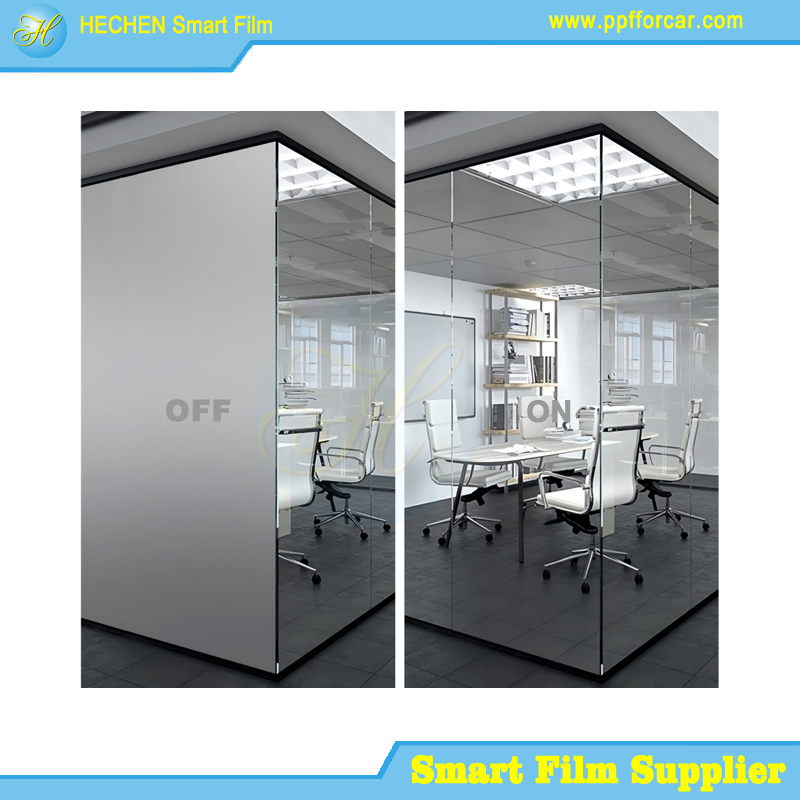
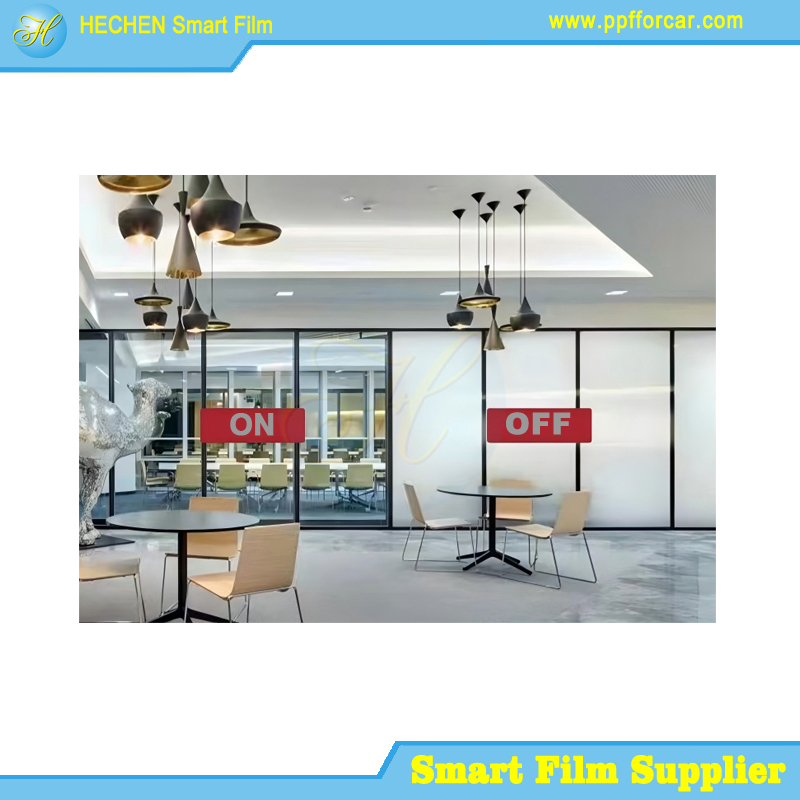
In the construction sector, PDLC dimming film is rapidly advancing from a niche glazing accessory to a core consideration in contemporary building envelopes, driven by rising expectations for adaptable spaces and occupant-centric design.
According to recent market data, the PDLC dimming film for construction market was valued at US$ 727.84 million in 2025 and is projected to grow to US$ 784.80 million in 2026, with a CAGR of 7.14%, reaching US$ 1,180.21 million by 2032.
Key application areas include:
Facades and curtain walls: Requiring lamination compatibility and long-term UV resistance
Partition walls: Prioritizing acoustic and visual privacy performance
Skylights and windows: Balancing daylighting with thermal management
Doors: Offering instant privacy control for commercial and residential settings
Green building certifications such as LEED and BREEAM, along with energy efficiency mandates, are accelerating adoption in commercial offices, healthcare facilities, and luxury residential projects. Retrofitting existing buildings represents a significant growth opportunity.
A notable example comes from Thailand, where Viewzen signed a contract worth approximately 5 billion won with the Roi Et Province government to supply PDLC smart film for major public and administrative facilities, including Roi Et City Hall. The project is part of Thailand's Digital Economy Promotion Agency's nationwide smart city expansion initiative, with the product blocking over 99.9% of UV rays and 80% of infrared rays, reducing building energy loss. Simulation results showed carbon emissions reduction of up to 62% per 1,000 square meters.
2. Automotive Sector: From High-End Option to Mainstream Feature
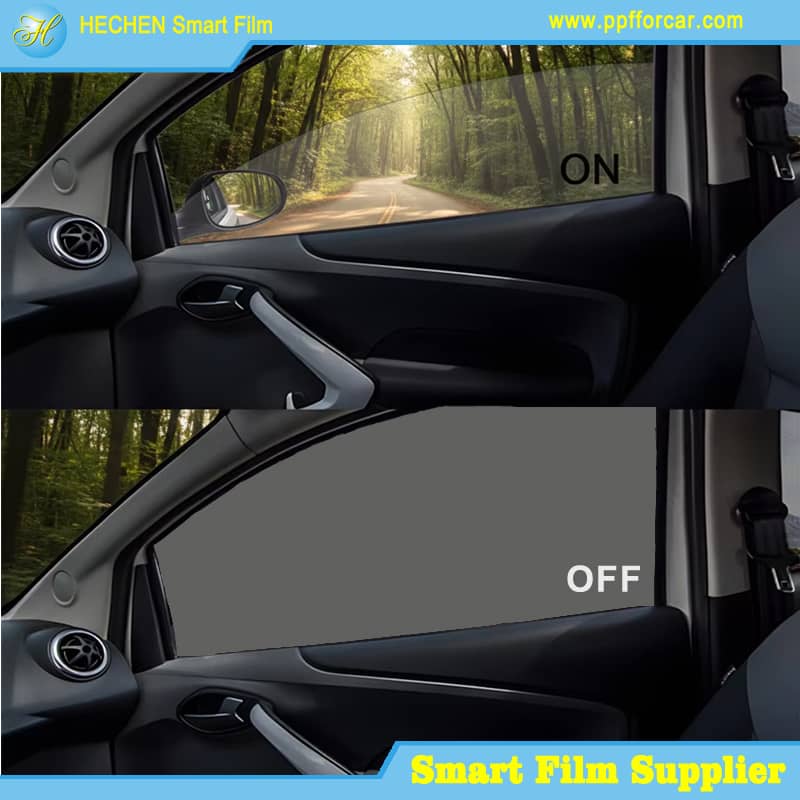
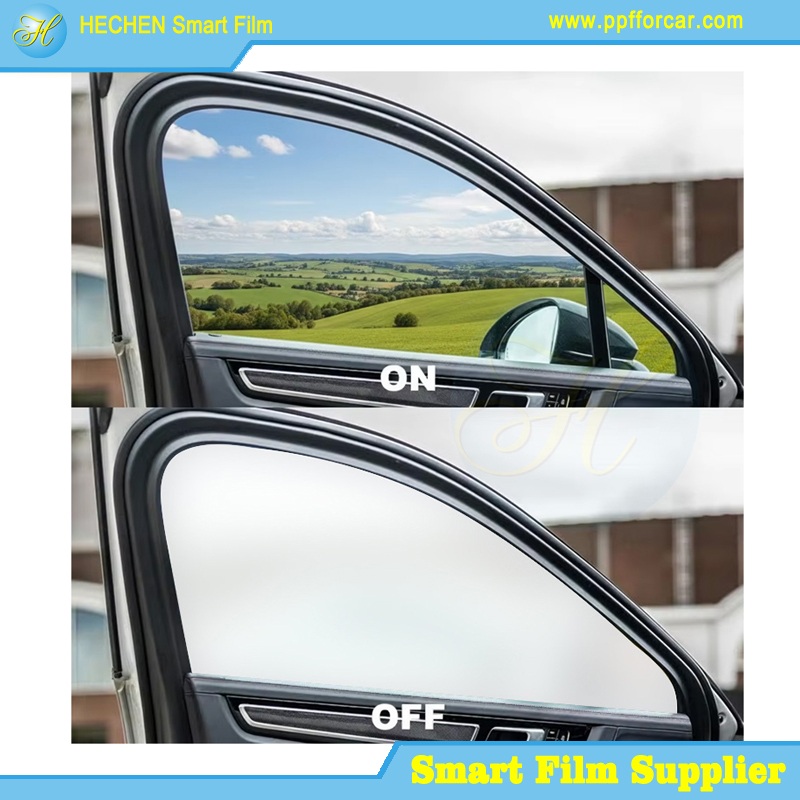
Premium and electric vehicle manufacturers increasingly incorporate PDLC technology for panoramic sunroofs and partition screens, driven by passenger comfort demands and lightweight material requirements. The technology is used for panoramic sunroofs, side windows, and rear windows, reducing glare while ensuring privacy and lighting, with an operating range of -30℃ to 110℃ to adapt to complex vehicle temperature environments.
The integration of PDLC in vehicles follows a clear market penetration path, with luxury new energy vehicles leading adoption.
3. Emerging Applications Across Industries
Healthcare: Installed on operating room observation windows and patient room partitions, PDLC film can switch transparency at any time to protect patient privacy while facilitating medical observation, meeting the strict requirements of medical scenarios for hygiene and privacy. Instant privacy control makes PDLC ideal for hospital ICU partitions and clean room applications.
Retail: Applied to storefront windows and fitting room glass, it can adjust transparency according to business needs, ensuring customer privacy while displaying store products, and enhancing the overall image of commercial spaces. Switchable transparent displays for storefront advertising represent a growing application.
Transportation: Beyond automotive, PDLC is finding applications in aircraft cabin partitions and marine privacy solutions. The technology is also being integrated into electronics for foldable devices and smart mirror applications.
III. Regional Landscape: Asia-Pacific Leads with Divergent Regional Drivers
Regional dynamics exert a pronounced influence on PDLC adoption pathways because construction practices, regulatory drivers, and procurement norms differ markedly across geographies.
| Region | CAGR (2024-2030) | Primary Driving Factors |
|---|---|---|
| Asia-Pacific | 12.3% | Rapid urbanization, infrastructure investment, manufacturing scale |
| Middle East | 10.8% | Luxury real estate, extreme climate adaptation needs |
| Europe | 9.2% | Strict energy efficiency regulations, green building standards |
| North America | 8.5% | Green building mandates, retrofit activity, smart city initiatives |
Asia-Pacific remains an epicenter of manufacturing scale and innovation, with concentrations of film converters, chemical suppliers, and electronics OEMs enabling rapid iteration and cost-competitive production. The region's strength in high-throughput coating and roll-to-roll processes accelerates time-to-market for new film types, while the close proximity of raw-material producers reduces lead times for critical precursors.
Europe, Middle East & Africa emphasizes regulatory compliance and energy performance across diverse climate zones, favoring solutions that demonstrate robust thermal behavior, long-term UV stability, and harmonized certification pathways. EMEA procurement often values design customization and supplier traceability alongside performance.
North America sees demand driven by retrofit activity in commercial real estate and momentum in mobility applications where OEMs seek lightweight, integrated solutions. Regional policy emphasis on energy-efficient building upgrades and advanced vehicle features is reshaping procurement horizons.
IV. Business Model Evolution: Navigating Supply Chain and Integration Challenges
Supply Chain Resilience
Tariff measures implemented in 2025 have created a structural inflection point for firms that rely on cross-border flows of specialized resins, liquid crystal compounds, and precision coating equipment. These measures have amplified input-cost volatility for manufacturers that import nematic and smectic liquid crystal precursors, thermoset and UV-curable polymers, and nanoparticle additives.
In response, procurement teams are evaluating near-shoring, regional sourcing partnerships, and dual-sourcing strategies to mitigate duty exposure and reduce lead-time variability. Beyond direct cost implications, tariffs have driven re-examination of product architectures. Some manufacturers have accelerated reformulation efforts to substitute tariff-exposed components with domestically available alternatives, while others have adjusted film laminate structures to minimize the proportion of tariff-liable inputs.
Smart Integration
Digitization and systems integration are changing buyer expectations. Smart buildings and connected vehicles require PDLC components that interface seamlessly with sensors, control networks, and user interfaces. This is shifting procurement emphasis from stand-alone product attributes to systems compatibility and lifecycle serviceability.
PDLC technology is being deeply integrated with IoT, enabling intelligent control such as voice and mobile phone linkage, and even linking with intelligent driving systems to realize automatic dimming according to environmental changes. Control options now range from simple switches to remote controls, smartphone apps, and full smart-home integration with systems like Lutron, Crestron, and Control4.
V. Future Outlook: 2026-2030 Development Roadmap
Near-Term (2026-2027): Manufacturing Consolidation and Standardization
Further manufacturing consolidation in Asia-Pacific
Standardization of installation protocols
Expansion of retrofit-friendly surface mount options broadening technology reach into existing building portfolios
Medium-Term (2027-2028): Cross-Industry Integration
Photovoltaic integration for self-powering windows
Curved and flexible solutions for automotive and architectural curves
Deep integration with IoT and building management systems
Long-Term (2029-2030): Mass Adoption and Circular Economy
Mass residential adoption as costs decrease
Circular economy models for recycling
Evolution from single-function dimming material to intelligent building surface integrating privacy control and energy management
Extended Horizons
The application boundaries will continue to expand, gradually penetrating into aerospace, marine, and renewable energy fields. PDLC will evolve from a single dimming material to an intelligent building surface integrating privacy control and energy management.
Conclusion
In 2026, PDLC smart film stands at the intersection of technological breakthrough, application explosion, and business model innovation. From advanced materials enabling superior optical performance, to the dual-drive market expansion in construction and automotive; from the Asia-Pacific leading regional landscape with divergent regional drivers, to business model evolution addressing supply chain resilience and smart integration—each trend is redefining the future of "windows."
The technology's appeal rests on its ability to offer instantaneous visual comfort adjustments while simplifying mechanical shading systems and enhancing aesthetic flexibility. In practice, glazing assemblies incorporating PDLC affect acoustic design choices, HVAC load modeling, and lighting control strategies, creating cross-disciplinary implications for project teams.
For industry participants, success depends on balancing performance optimization with cost reduction while meeting diverse sector requirements across architecture, automotive, and emerging applications. As the global pursuit of energy efficiency and sustainable development intensifies, PDLC smart film is positioned for robust growth through 2030 and beyond, evolving from an innovative product to a standard feature of future buildings and mobility.
This intelligent revolution in windows has only just begun.
For more about The Future of Windows: 2026 Trends in PDLC Smart Film You Need to Know. Everything you need to know, you can pay a visit to https://www.ppfforcar.com/product/PDLC-Smart-Film/ for more info.