What is Self Sticky Dimming Film
In the rapidly evolving world of smart materials and home automation, self sticky dimming film stands out as a revolutionary technology that blends functionality, convenience, and innovation. Also known as self-adhesive smart dimming film or switchable privacy film, this product allows users to transform ordinary glass surfaces into dynamic, controllable elements. With a simple application process akin to sticking a decal, it enables windows, doors, partitions, and other glass fixtures to switch between transparent and opaque states at will. This eliminates the need for traditional blinds, curtains, or static tints, offering a sleek, modern alternative for privacy, light control, and energy efficiency.
The concept of dimming film has its roots in advanced electro-optical technologies, particularly Polymer Dispersed Liquid Crystal (PDLC) systems, which have been refined over decades. Self sticky versions make this technology accessible to everyday consumers, requiring no major renovations or professional expertise for basic installations. As urbanization increases and smart homes become the norm, the demand for such adaptable solutions surges. According to industry reports, the global smart glass market, which includes dimming films, is expected to reach billions in value by the late 2020s, driven by applications in residential, commercial, and automotive sectors.
This article explores the essence of self sticky dimming film in depth: its composition, mechanisms, advantages, practical uses, installation guidelines, comparisons with alternatives, and emerging trends. Whether you're a homeowner looking to enhance privacy in a high-rise apartment or an architect designing energy-efficient buildings, understanding this film can unlock new possibilities in space management and environmental control. By the conclusion, you'll appreciate how this seemingly simple adhesive film represents a leap forward in material science, making "smart" living more attainable than ever.
Defining Self Sticky Dimming Film
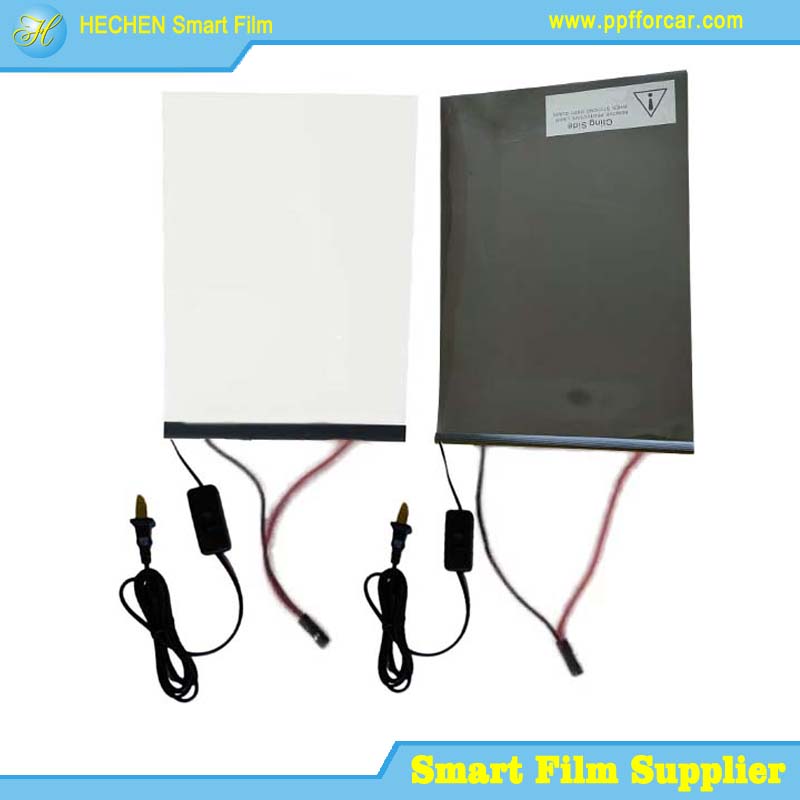
Self sticky dimming film is a thin, flexible laminate that adheres directly to glass surfaces, providing on-demand opacity adjustment. The "self sticky" aspect refers to its pressure-sensitive adhesive backing, which allows for easy, bubble-free application without additional glues or tools. At its core, the film utilizes PDLC technology, where liquid crystals are dispersed within a polymer matrix. This setup enables the film to alter its light-scattering properties when subjected to an electrical stimulus.
Typically measuring between 0.3mm and 0.5mm in thickness, the film comes in rolls or pre-cut sheets, customizable to fit various glass sizes. Key layers include:
· Adhesive Layer: A high-quality, removable adhesive that bonds securely to clean glass without residue upon removal, making it ideal for temporary or rental applications.
· PDLC Core: The functional heart of the film, comprising microscopic liquid crystal droplets embedded in a polymer. These droplets dictate the film's transparency.
· Conductive Electrodes: Transparent layers, often made of indium tin oxide (ITO), that apply voltage across the PDLC layer.
· Protective Coatings: Outer films that guard against scratches, UV degradation, and moisture, ensuring longevity.
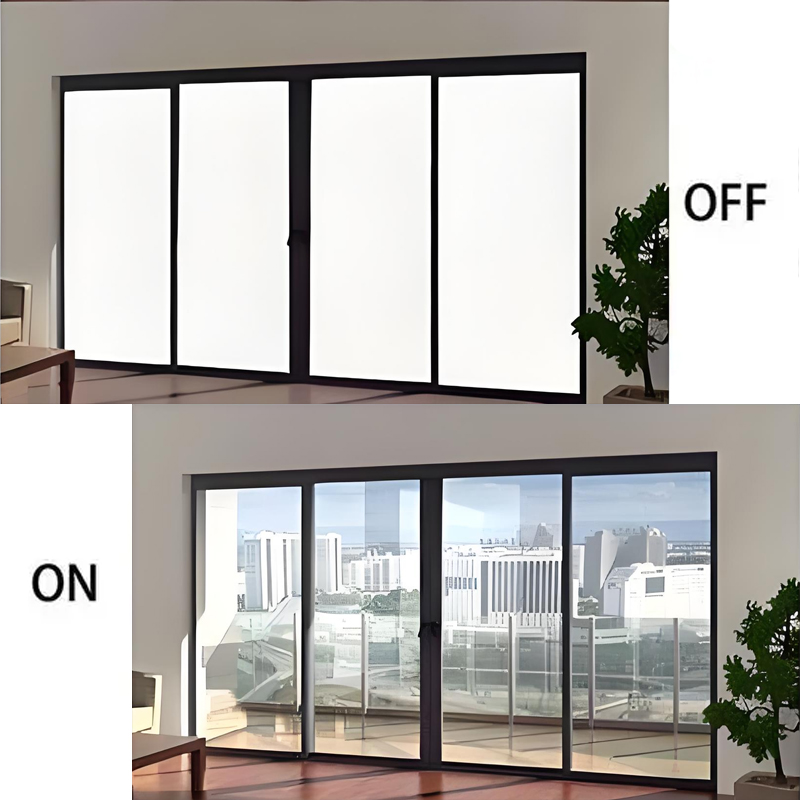
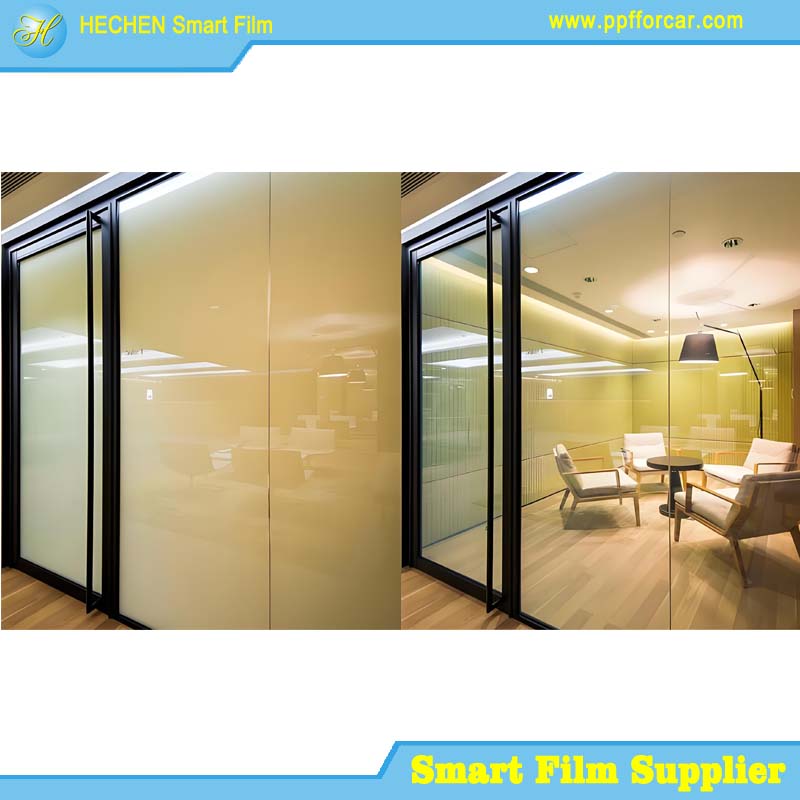
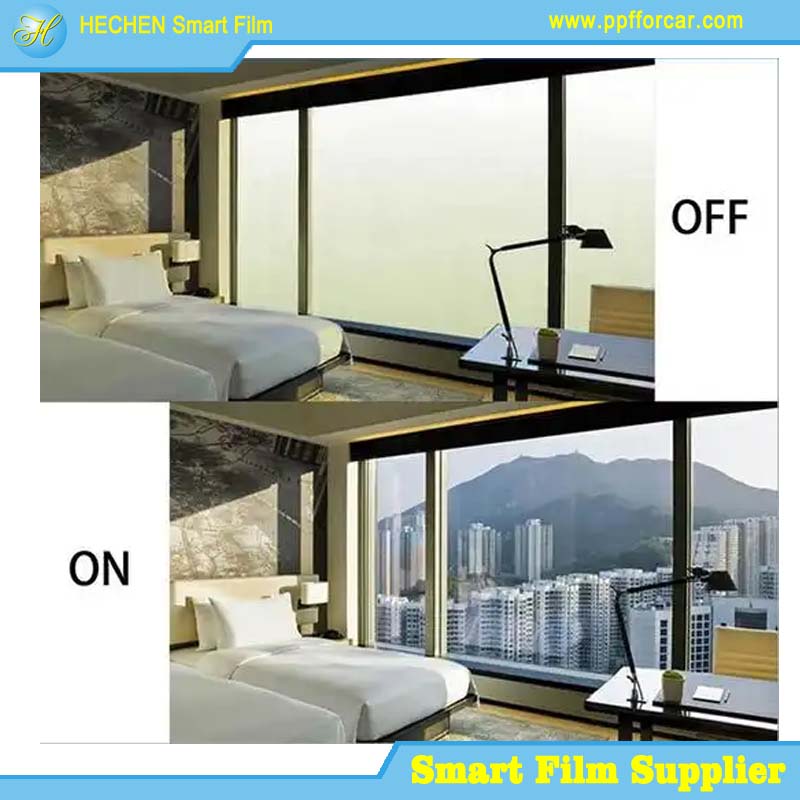
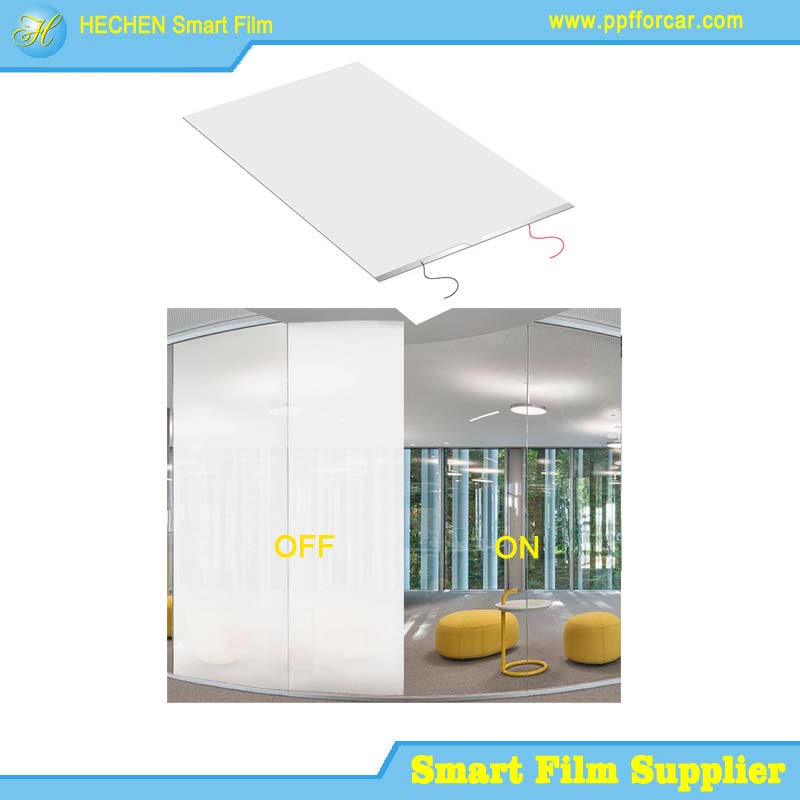
Unlike conventional window films that permanently tint or reflect light, self sticky dimming film is switchable. In its default (off) state, it's frosted or milky, diffusing light for privacy. When powered on, it becomes clear, allowing unobstructed views. This binary or variable control distinguishes it from passive alternatives.
Manufacturers produce variants tailored to specific needs, such as low-voltage models for safety in homes with children or high-contrast films for projection screens. Colors can range from neutral gray to subtle tints, though most maintain a clear appearance to preserve natural aesthetics. The film's self-adhesive nature democratizes access to smart glass technology, previously limited to expensive, factory-integrated panels.
From a materials perspective, advancements in nanotechnology have enhanced the film's durability and efficiency. Modern iterations resist temperatures from -20°C to 70°C, making them suitable for diverse climates. Certifications for fire resistance and environmental safety further underscore its reliability.
The Science Behind How It Works
The operational principle of self sticky dimming film is rooted in electrochromism and liquid crystal alignment. In the absence of electricity, the liquid crystals within the PDLC matrix are randomly oriented. This randomness causes incoming light to scatter, resulting in an opaque, translucent effect that blocks direct sightlines while permitting ambient light diffusion. This state is energy-efficient, as no power is consumed to maintain opacity—ideal for privacy-focused scenarios.
Upon applying a low-voltage current (typically 24V to 110V AC/DC), the electric field aligns the liquid crystals uniformly. Aligned crystals allow light to pass through without scattering, rendering the film transparent. The switch occurs in milliseconds, with power consumption as low as 3-7 watts per square meter during the "on" state. Once power is removed, the crystals revert to disorder, restoring opacity.
Control mechanisms are diverse and user-friendly. Basic setups use a wall switch or remote, while advanced integrations connect to smart home ecosystems like Zigbee, Wi-Fi, or Bluetooth. Apps on smartphones or voice assistants (e.g., Siri, Alexa) enable remote operation, scheduling, or sensor-based automation—dimming automatically at sunset or when motion is detected.
For nuanced control, some films support PWM (Pulse Width Modulation) dimmers, allowing gradations of opacity from 0% (fully transparent) to 100% (fully opaque). This variability is achieved by modulating the voltage frequency, offering fine-tuned light management.
Scientifically, this technology echoes LCD screens but scales it up for architectural use. Research in photonics and polymer chemistry continues to refine it, reducing haze in the clear state (typically under 5%) and improving switching speeds. Power is supplied via thin bus bars along the film's edges, connected to transformers that ensure safe, low-voltage delivery.
In terms of physics, the film's behavior involves birefringence—the differential refraction of light based on polarization. When aligned, the refractive indices of the liquid crystals and polymer match, minimizing scattering. This precise engineering makes the film not just functional but also optically superior to mechanical alternatives.
Key Benefits and Advantages
Self sticky dimming film offers a multitude of benefits that address modern living challenges, from energy conservation to enhanced well-being.
Privacy on Demand: The film's instant switchability provides superior privacy compared to fixed tints or blinds. It's perfect for urban dwellings where close proximity to neighbors demands flexible solutions, allowing clear views during the day and seclusion at night.
Energy Savings: By blocking solar heat in opaque mode, it reduces cooling costs in warm climates. Conversely, transparent mode maximizes natural light, cutting artificial lighting needs. Independent studies show potential energy reductions of 15-25% in glazed buildings, contributing to lower carbon footprints.
UV and Glare Protection: It filters up to 99% of UV rays, safeguarding furniture, artwork, and skin from damage. Glare reduction improves comfort for screen-based work, reducing eye strain and boosting productivity.
Ease of Installation and Maintenance: The self-adhesive design simplifies application, often doable as a DIY project. Maintenance involves gentle cleaning with non-abrasive cloths, and the film's durability spans 10-20 years.
Aesthetic Flexibility: Slim and frameless, it maintains a clean look without bulky hardware. Custom cuts and patterns allow for creative designs, such as logos on office partitions or decorative motifs in homes.
Health and Safety Enhancements: Diffused light supports better circadian rhythms, while the absence of cords or mechanisms reduces hazards for children and pets. In healthcare, it promotes hygiene by replacing fabric curtains.
Cost-Effectiveness: Priced at $40-90 per square foot, it's more affordable than full smart glass replacements. ROI comes quickly through energy savings and increased property value.
Environmentally, the film aligns with sustainable practices by minimizing waste—it's recyclable in many cases—and supporting green certifications. Its low power use further cements its eco-friendly profile.
Diverse Applications in Everyday Life
The adaptability of self sticky dimming film spans numerous industries, transforming how spaces are used.
Residential Settings: In homes, it's applied to bathroom windows, bedroom doors, or kitchen partitions for instant privacy. Skylights can dim to control heat, while conservatories benefit from glare-free enjoyment.
Commercial Environments: Offices use it for conference rooms, creating private spaces during meetings without permanent walls. Retail stores employ it for changing rooms or display windows, switching to opaque for stock management.
Hospitality and Leisure: Hotels integrate it into suites for luxurious, tech-enhanced experiences—dimming shower enclosures or balcony doors. Restaurants create intimate zones, adapting ambiance dynamically.
Healthcare Facilities: Hospitals and clinics apply it to observation windows, patient rooms, and labs, ensuring quick privacy while maintaining sterility.
Educational and Public Spaces: Schools dim classroom windows to minimize distractions, and libraries use it for study pods. Museums protect exhibits from light damage selectively.
Automotive and Transportation: Vehicle side windows or bus partitions gain variable tinting, complying with safety regs by clearing when needed.
Architectural and Industrial Uses: In factories, it separates work areas; in greenhouses, it regulates light for plant growth.
Real-world examples abound: A European hotel chain reported 30% energy savings post-installation, while a U.S. office complex noted improved employee satisfaction due to customizable lighting.
Step-by-Step Installation Guide
Installing self sticky dimming film is accessible, though precision is key.
Surface Preparation: Clean glass with alcohol wipes to remove contaminants. Measure dimensions accurately.
Film Cutting and Application: Trim film slightly oversized. Peel backing gradually, aligning and squeegeeing from center outward to expel air.
Electrical Setup: Attach bus bars and wires, connecting to a power supply. Seal edges for moisture protection.
Testing and Finishing: Power on to verify uniform switching. Trim excess if needed.
Professional installers handle complex wiring, ensuring compliance with electrical codes.
Comparing to Other Dimming Solutions
Versus static films: More versatile but higher initial cost.
Electrochromic alternatives: Slower switching, pricier.
Mechanical shades: Less sleek, higher maintenance.
SPD films: Faster but darker in clear state.
Self sticky PDLC excels in balance.
Future Developments and Trends
Innovations include wireless powering, AI integration for predictive dimming, and biodegradable materials. Market expansion targets emerging economies, with IoT convergence driving adoption.
Conclusion
Self sticky dimming film encapsulates the future of interactive environments, offering practical, innovative control over light and privacy. As technology advances, its role in sustainable, smart living will only grow.
For more about what is self sticky dimming film, you can pay a visit to Hechen PDLC Smart Film Manufacturers for more info.