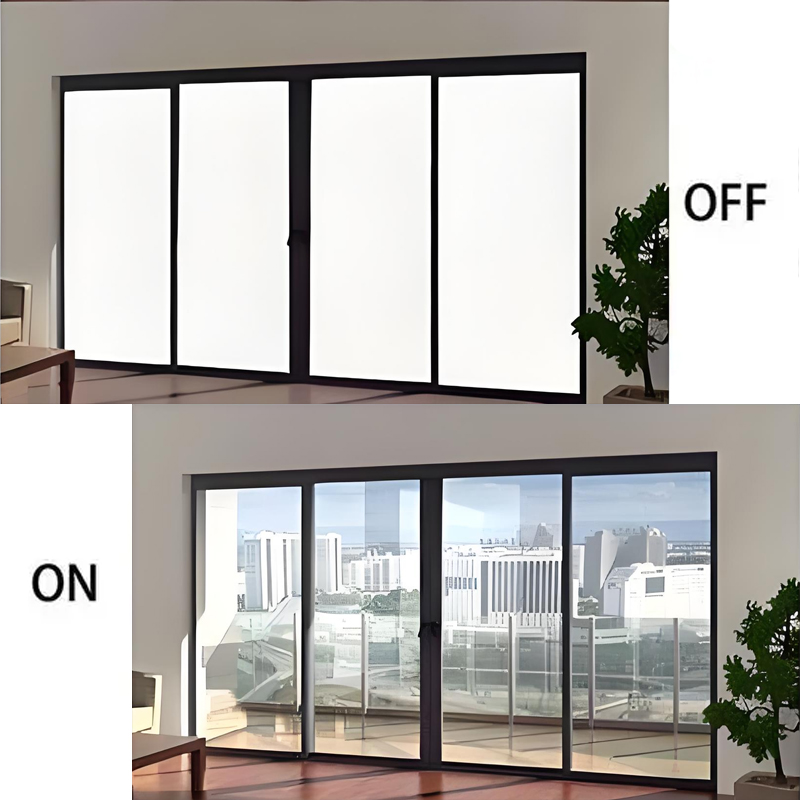
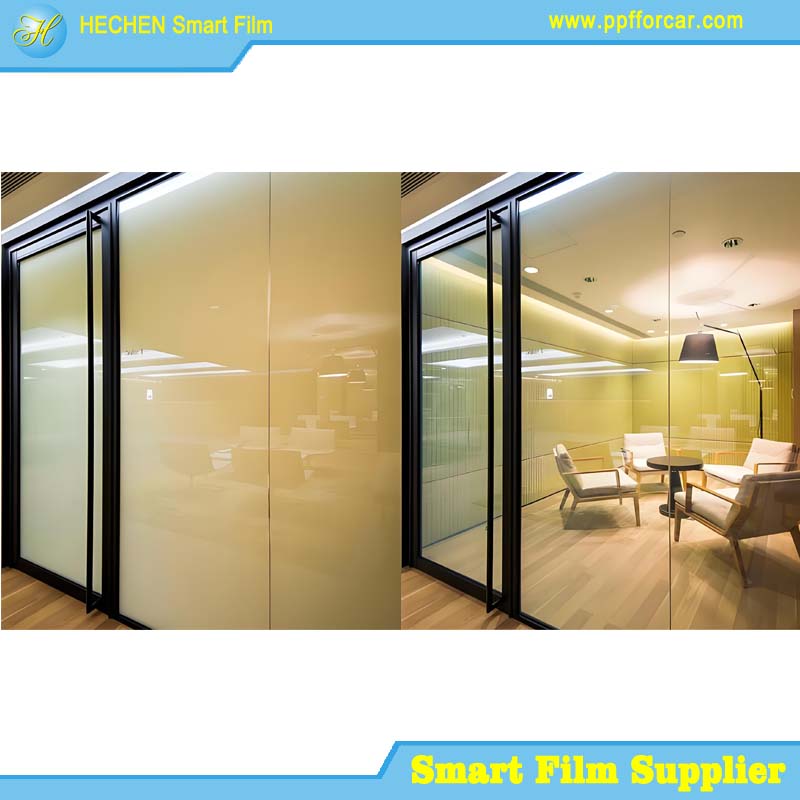
Unveiling the Technology of PDLC Film: Glass That Instantly Switches Between Frosted and Transparent
In an era where technology seamlessly integrates into our daily lives, few innovations capture the imagination quite like smart glass. Imagine a window that, at the flick of a switch or the tap of an app, transforms from a clear, unobstructed view to a frosted, private barrier. This isn't science fiction; it's the reality brought to life by Polymer Dispersed Liquid Crystal (PDLC) film technology. PDLC film represents a pinnacle of materials science, allowing glass surfaces to switch between transparent and opaque states almost instantaneously. This "switchable glass" has revolutionized industries from architecture to automotive, offering unprecedented control over privacy, light, and energy efficiency.
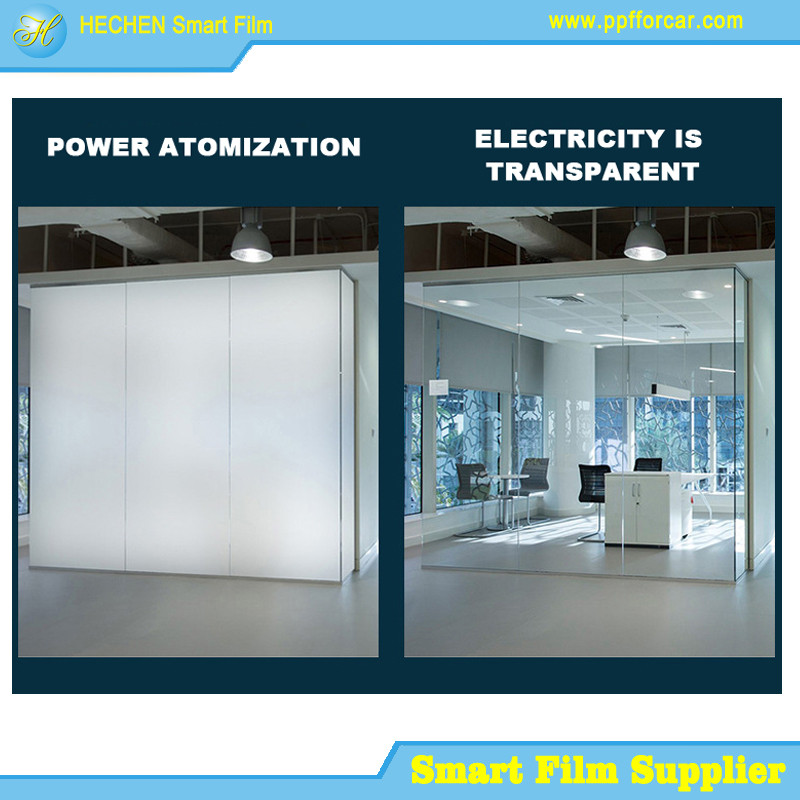
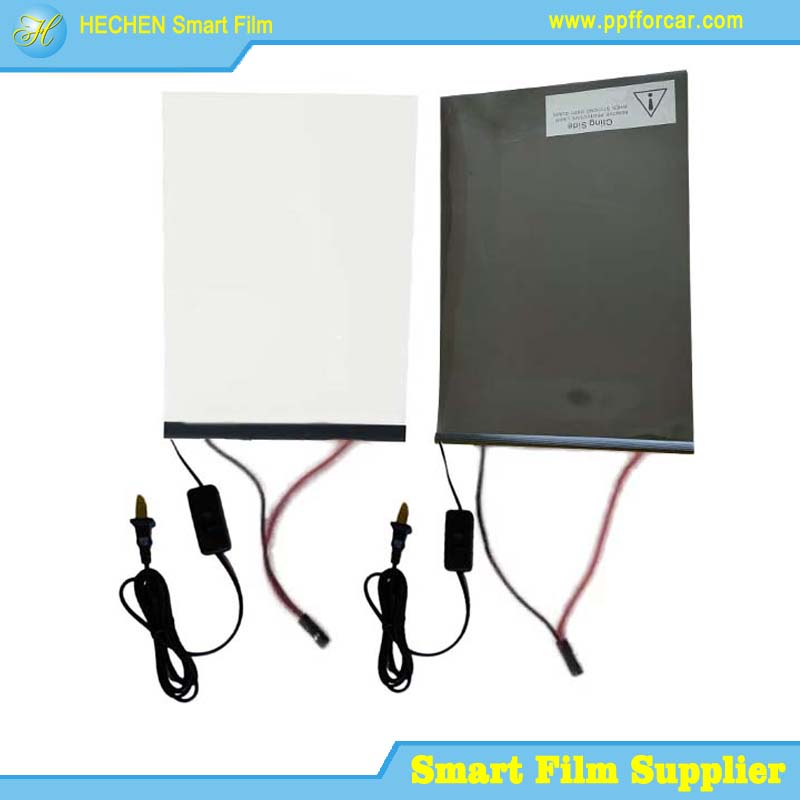
At its core, PDLC film is a thin, flexible layer embedded with liquid crystals that respond to electrical stimuli. When no power is applied, the glass appears frosted, scattering light to provide privacy. Apply a low voltage, and it becomes crystal clear, allowing full visibility. This dual functionality addresses age-old challenges in design and functionality, such as the need for curtains or blinds, while introducing modern benefits like UV protection and thermal regulation.
The technology's appeal lies in its simplicity and versatility, making it a staple in smart homes, offices, and even high-end vehicles.
The rise of PDLC film aligns with broader trends toward sustainable and intelligent building materials. As urbanization accelerates and energy conservation becomes paramount, solutions like PDLC offer ways to reduce reliance on artificial lighting and air conditioning. For instance, in commercial buildings, these films can dynamically adjust to sunlight, minimizing glare and heat gain. This not only enhances occupant comfort but also contributes to green building certifications like LEED.
Moreover, PDLC's adoption has been fueled by advancements in manufacturing, making it more accessible and cost-effective. Once a niche product for luxury applications, it's now finding its way into everyday settings, from residential windows to interactive displays. As we delve deeper into this article, we'll uncover the history, mechanics, applications, advantages, challenges, and future prospects of PDLC film, shedding light on why it's poised to become an integral part of our built environment.
The History and Evolution of PDLC Technology
The roots of PDLC technology trace back to the mid-20th century, when scientists began exploring liquid crystals for display purposes. Liquid crystals, discovered in 1888 by Austrian botanist Friedrich Reinitzer, exhibit properties between solids and liquids, allowing them to change orientation under external fields. However, it wasn't until the 1980s that PDLC emerged as a viable technology for smart glass. Pioneered by researchers at Kent State University in the United States, PDLC was developed as an extension of liquid crystal display (LCD) technology. The key innovation involved dispersing liquid crystal droplets within a polymer matrix, creating a film that could be laminated between glass panes.
Early experiments focused on electro-optical properties, leading to patents in the late 1980s by companies like Raychem Corporation. These initial prototypes were rudimentary, with issues like high voltage requirements and limited durability, but they laid the groundwork for commercial applications. The 1990s marked a turning point with the commercialization of PDLC films. Companies such as 3M and Asahi Glass began producing switchable glass for architectural uses, initially targeting high-profile projects like museums and corporate headquarters. The technology gained traction in Europe and Asia, where energy-efficient building codes spurred innovation. By the early 2000s, improvements in polymer chemistry reduced power consumption and enhanced optical clarity, making PDLC more practical. A significant milestone came in the 2010s with the integration of PDLC into automotive sectors. Luxury car manufacturers like Mercedes-Benz incorporated switchable sunroofs, allowing drivers to control cabin light on demand. Simultaneously, the rise of smart homes propelled residential adoption, with films applied to shower enclosures and partitions.
Today, PDLC has evolved with nanotechnology enhancements, offering better contrast ratios and faster switching times—often under a second. Ongoing research addresses past limitations, such as haze in the transparent state, through advanced droplet sizing and polymer formulations.
From its academic origins to widespread industrial use, PDLC's journey reflects the relentless pursuit of smarter materials.
The Scientific Principles Behind PDLC Film
To truly appreciate PDLC film, one must understand its underlying science. PDLC consists of microscopic liquid crystal droplets suspended in a solid polymer matrix, sandwiched between two transparent conductive layers, typically indium tin oxide (ITO) coated on polyethylene terephthalate (PET) films. In the off state (no voltage applied), the liquid crystals are randomly oriented within the droplets. This misalignment causes incoming light to scatter in multiple directions, rendering the film opaque or frosted. The scattering effect is due to the refractive index mismatch between the liquid crystals and the polymer—light bends unpredictably, creating a milky appearance that blocks direct visibility while allowing diffuse light transmission.
When a low alternating current (AC) voltage—typically 24 to 110 volts—is applied across the conductive layers, an electric field aligns the liquid crystal molecules parallel to the field. This alignment matches the refractive indices, allowing light to pass through unimpeded, making the film transparent. The transition is reversible and instantaneous, with no mechanical parts involved, ensuring longevity and reliability.
Key to this functionality is the nematic phase of liquid crystals, where molecules exhibit long-range orientational order but no positional order. The polymer matrix, often UV-cured or thermally set, encapsulates the droplets (1-5 microns in diameter) to prevent coalescence. Variations like Polymer Stabilized Liquid Crystals (PSLC) embed lower concentrations of liquid crystals for improved transparency but may require different voltages. Optical properties are crucial: in the clear state, PDLC achieves up to 85-90% light transmission with minimal haze (under 5%). In the opaque state, it can block over 99% of UV rays, protecting interiors from fading. Power consumption is low, around 5-10 watts per square meter when on, and zero when off. This electro-optical switching draws from broader liquid crystal research, akin to LCD screens but scaled for larger surfaces. Advanced formulations incorporate dyes for colored tints or nanoparticles for enhanced thermal properties, expanding its utility.
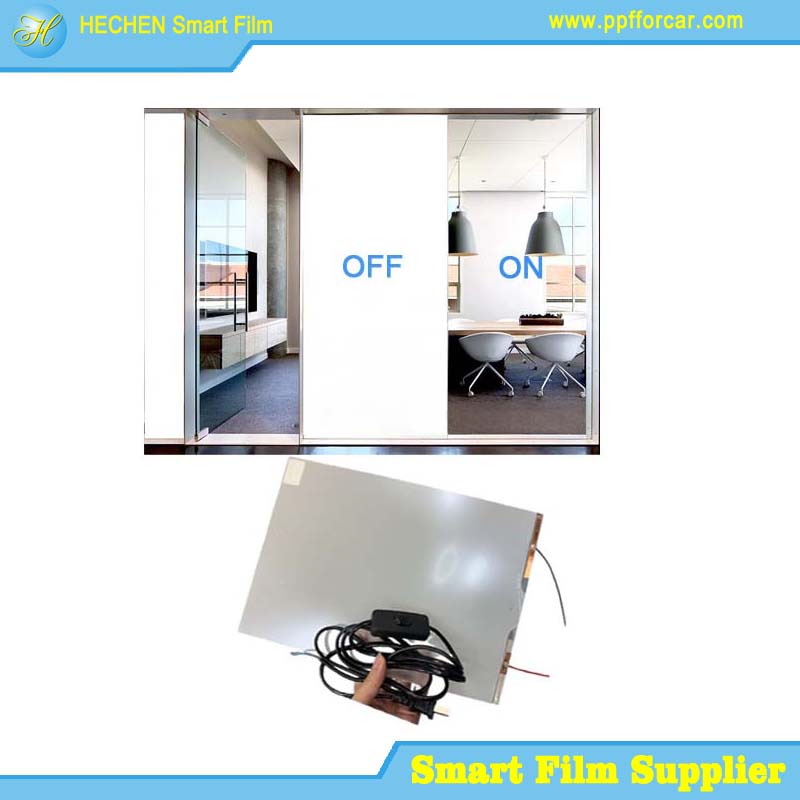
Manufacturing Process of PDLC Film
Producing PDLC film involves precise engineering. It begins with mixing liquid crystals with a prepolymer solution, often acrylates or epoxies. This emulsion is then coated onto an ITO-PET substrate using roll-to-roll processes for efficiency. UV polymerization cures the mixture, phase-separating the liquid crystals into droplets within the hardened polymer. A second ITO-PET layer is laminated on top, creating a flexible film typically 0.3-0.5 mm thick. Quality control ensures uniform droplet size for consistent performance. Films can be cut to size and retrofitted onto existing glass via adhesives, or integrated into laminated glass during fabrication. Modern facilities use cleanrooms to avoid contaminants, with automation reducing costs.
Diverse Applications of PDLC Film
PDLC's versatility shines in its applications. In architecture, it's used for office partitions, enabling open-plan designs that convert to private spaces instantly. Hospitals employ it in patient rooms for dignity-preserving windows, while retail stores use it for dynamic displays that reveal products on cue. In automotive, PDLC sunroofs and side windows provide glare control without mechanical shades. Aviation and marine sectors benefit from cockpit privacy screens. In residential settings, it's ideal for bathrooms and home theaters, offering privacy without sacrificing natural light. Emerging uses include projection screens—opaque mode turns glass into a high-contrast surface for rear-projection. In transportation, train and bus windows use PDLC for passenger comfort. Case studies abound: The Edge building in Amsterdam features PDLC for energy-efficient facades, reducing cooling needs by 20%. In healthcare, Mayo Clinic installations enhance patient privacy while maintaining sterility.
Advantages and Benefits
PDLC offers myriad benefits. Privacy on demand eliminates traditional coverings, saving space and maintenance. Energy efficiency is key: by controlling solar heat gain, it lowers HVAC costs by up to 15%.UV blocking protects furnishings, while sound insulation adds acoustic benefits. Aesthetically, it provides a sleek, modern look with customizable tints. Durability exceeds 50,000 cycles, with low power use. Environmentally, it supports sustainability by reducing material waste from blinds.
Challenges and Limitations
Despite advantages, challenges persist. High initial costs—$50-150 per square foot—limit widespread adoption.
Installation requires skilled labor, especially for retrofits. Technical issues include slight haze (2-5%) in clear mode and angle-dependent transparency. It needs power to stay transparent, posing issues during outages. Temperature sensitivity affects performance below 0°C or above 70°C, and larger panels may have uneven switching. Regulatory hurdles in some regions and competition from electrochromic glass add complexity.
Future Prospects
The future of PDLC is bright, with R&D focusing on lower costs via scalable production. Integration with IoT allows voice or app control, while solar-powered variants address energy needs. Hybrid technologies combining PDLC with photovoltaics or thermochromics promise multifunctional glass. Market growth is projected at 15% CAGR through 2030, driven by smart cities. Innovations like flexible, rollable films could expand to wearables or curved surfaces.
Conclusion
PDLC film exemplifies how technology can transform the mundane into the extraordinary. From its scientific foundations to practical applications, it offers a glimpse into a future where our environments adapt to us. As challenges are overcome, PDLC will undoubtedly become ubiquitous, redefining transparency in every sense.
For more about the PDLC Smart Film Manufacturers: Innovators of Switchable Glass Technology, you can pay a visit to Hechen PDLC Smart Film Manufacturers for more info.