What Technical Requirements Are Needed for Applying Self-adhesive PDLC Film to Existing Office Glass
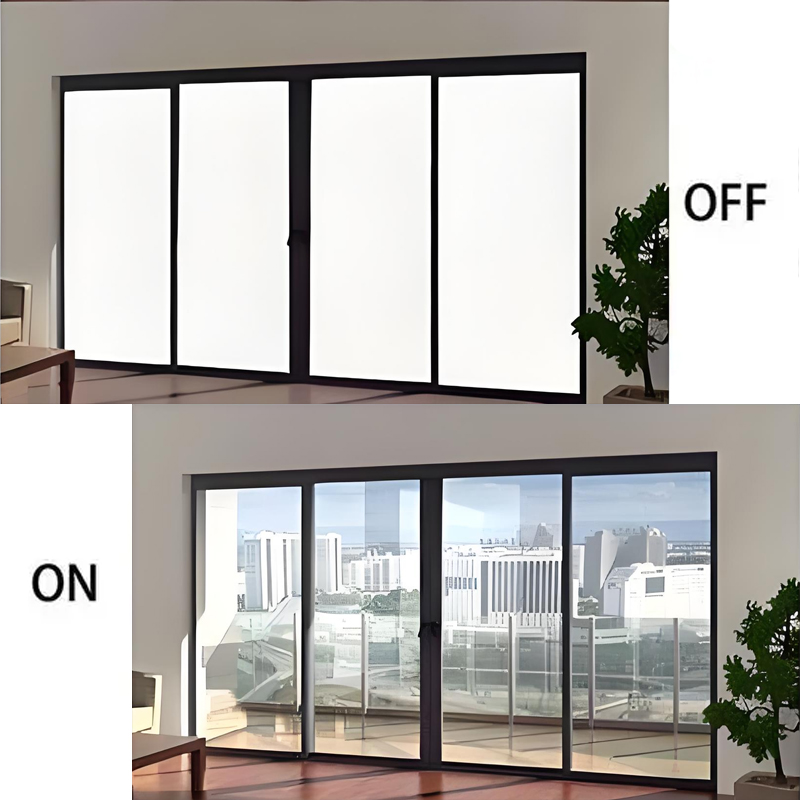
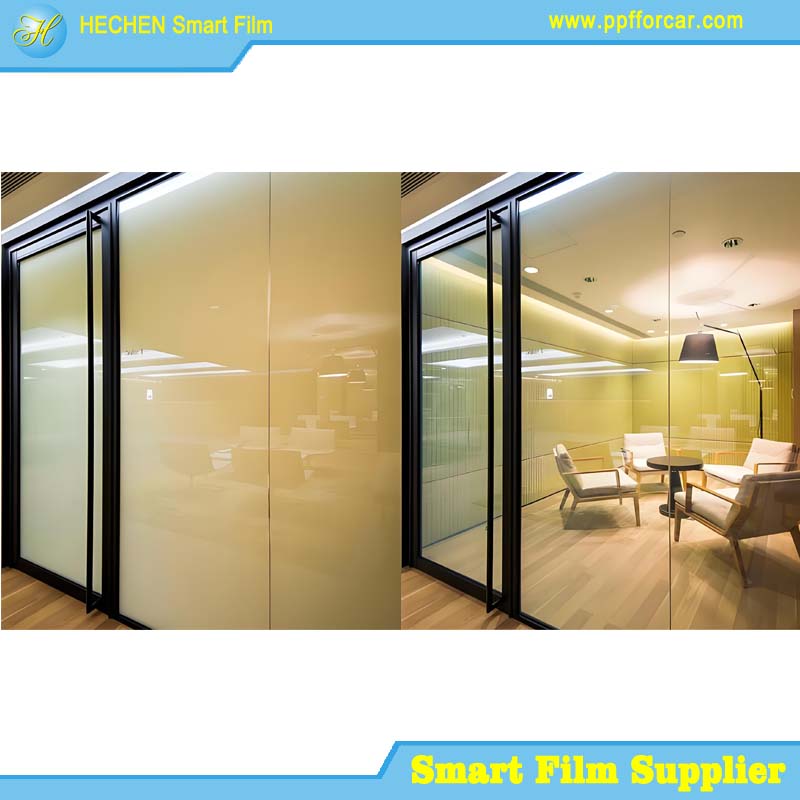
In the modern office environment, where flexibility, privacy, and energy efficiency are paramount, retrofitting existing glass partitions and windows with smart technologies has become a popular solution. One such innovation is the self-adhesive Polymer Dispersed Liquid Crystal (PDLC) film, commonly known as smart film or switchable privacy film. This technology allows glass surfaces to transition from transparent to opaque at the flick of a switch, providing on-demand privacy without the need for curtains or blinds. Retrofitting with PDLC film is particularly appealing for offices because it minimizes disruption—there's no need to replace entire glass panels, making it a cost-effective upgrade for existing structures.
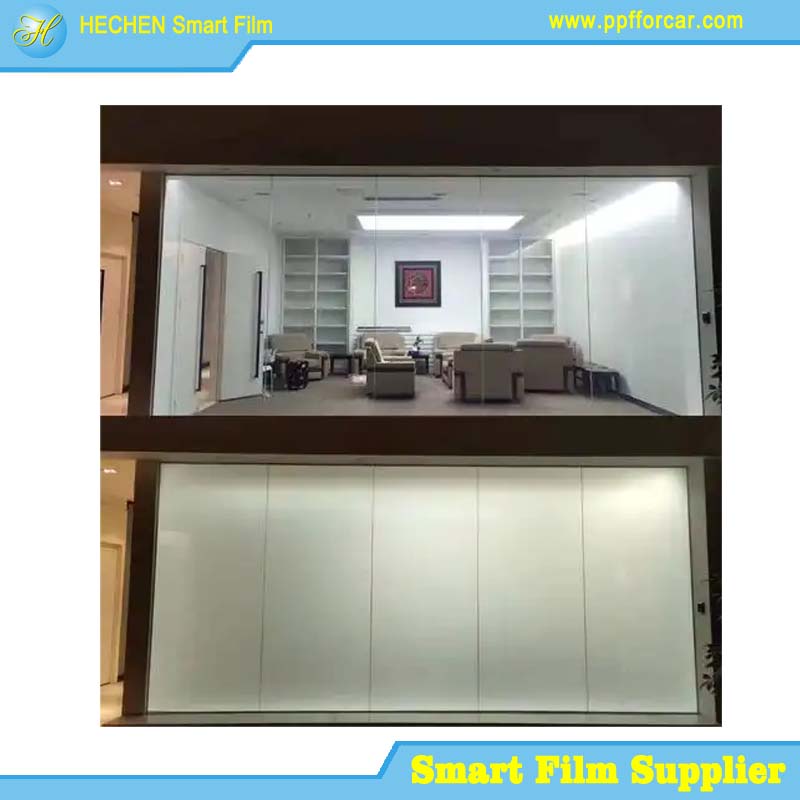
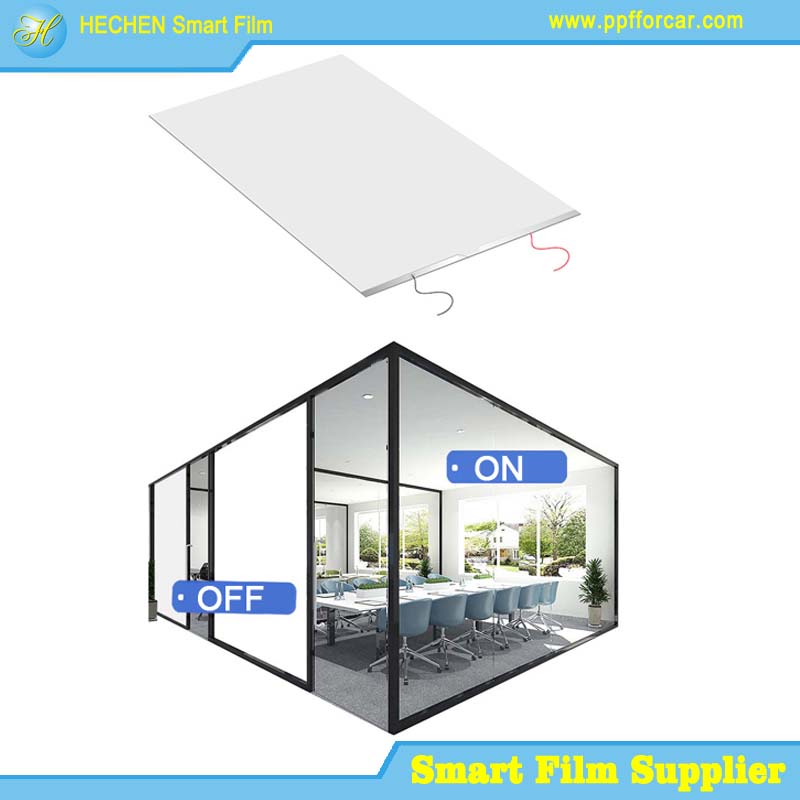
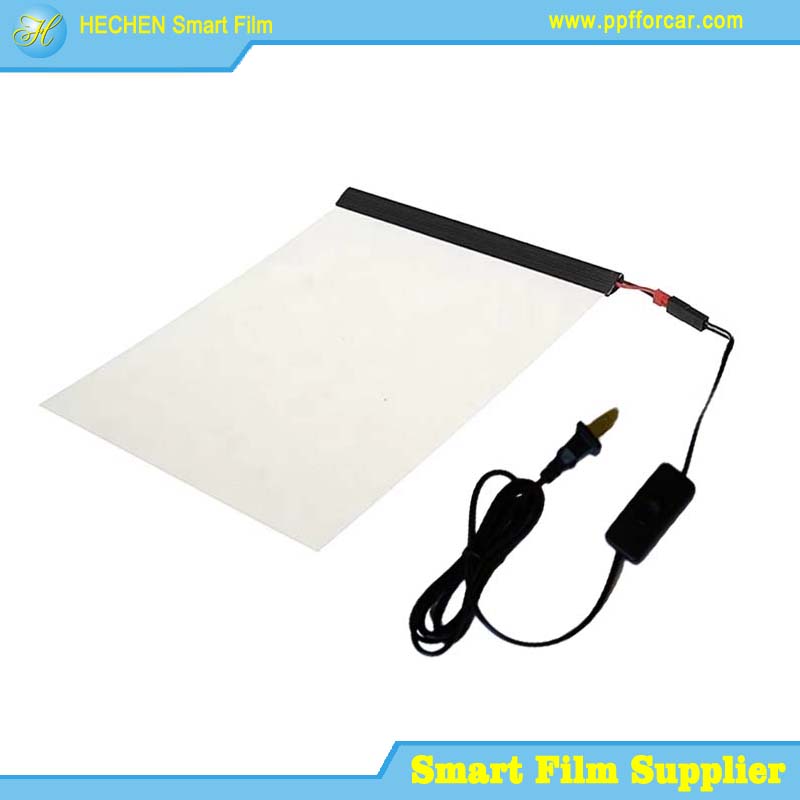
PDLC film consists of a thin layer of liquid crystals dispersed in a polymer matrix, sandwiched between conductive layers. When an electric current is applied, the liquid crystals align, allowing light to pass through and rendering the film transparent. In its off state, the crystals scatter light, creating an opaque appearance. Self-adhesive PDLC film variants feature a cling layer, typically silicone-based, that bonds directly to glass, ideal for retrofitting applications in conference rooms, executive offices, and open-plan workspaces.
However, the success of this retrofit hinges on precise installation. The glass surface's flatness and cleanliness are critical technical specifications that directly influence the film's adhesion, durability, and optical performance. Imperfections can lead to bubbles, peeling, or uneven switching, compromising the film's haze levels (typically 5-7% in the off state) and transmittance (around 75-78% in the on state). Poor installation may result in visible defects, reduced UV blocking (up to 99%), or even electrical failures, affecting the overall aesthetic and functionality in an office setting. This article delves into the strict requirements for glass surface preparation, installation best practices, and strategies to prevent common issues like bubbles and peeling, drawing from manufacturer guidelines and industry standards.
Retrofitting offices with PDLC film not only enhances privacy but also contributes to energy savings by reducing the need for artificial lighting and air conditioning. For instance, in high-rise office buildings, switchable glass can block solar heat gain while maintaining views, aligning with sustainable design principles. Yet, achieving optimal results demands adherence to technical specs, as even minor deviations can lead to costly rework. Understanding these specifications ensures that facility managers and installers can maximize the film's lifespan, often exceeding 10 years with proper maintenance.
Understanding PDLC Film Technology
PDLC technology has evolved significantly since its inception in the 1980s, with self-adhesive films emerging as a retrofit-friendly option in the last decade. Unlike laminated PDLC glass, which requires embedding the film between new glass layers during manufacturing, self-adhesive PDLC film can be applied directly to existing glass surfaces. This makes it suitable for office retrofits where downtime must be minimized.
The film's structure typically includes:
· A protective outer layer (0.03-0.05 mm thick).
· The PDLC active matrix (0.22 mm), containing the liquid crystals.
· Conductive ITO (Indium Tin Oxide) layers for electrical activation.
· An adhesive layer (0.045-0.06 mm), often silicone-based for cling.
· A release liner for protection during handling.
Technical specifications vary by manufacturer, but common parameters include film thickness of 0.5-0.7 mm (±10%), operating voltages of 42-70 VAC, and low power consumption (1-7 W/m²). Optical performance is key: in the transparent state, visible light transmittance reaches 75-78%, with haze below 4-7%. In opaque mode, it scatters light effectively within 1 inch, providing privacy without blocking natural light entirely.
For office applications, retrofitting involves assessing existing glass—typically float glass in partitions or windows. The film is custom-cut to fit, leaving 2-3 mm gaps from edges to prevent contact with frames and avoid electrical shorts. This gap also accommodates thermal expansion, crucial in office environments with varying temperatures.
Environmental factors influence performance: PDLC films operate best between -20°C and +50°C, with humidity under 80% to prevent condensation. In humid offices, edge sealing with neutral-cure silicone is essential to block moisture ingress, which could degrade the liquid crystals and cause optical distortions like yellowing or reduced switching speed (typically <1 second).
Manufacturers like Gauzy, Filmbase, and Intelligent Glass emphasize that retrofitting success depends on surface compatibility. Existing glass must comply with standards like ASTM C-1036 for flat glass, ensuring no warpage or defects that could trap air or weaken adhesion.
For curved glass, flexible PDLC variants exist, but standard self-adhesive films are optimized for flat surfaces, limiting their use in non-planar office elements.
Electrically, the film requires busbars (copper tabs) for connection to a controller, ramping voltage to avoid surges that might burn spots and impair optics. In offices, integration with smart building systems via DMX or 0-10V interfaces allows seamless control, enhancing user experience.
Overall, PDLC film's retrofit potential transforms static office glass into dynamic assets, but only if installation specs are met rigorously.
Technical Specifications for Glass Surface Flatness and Cleanliness
The cornerstone of successful PDLC film installation is the glass surface's condition. Flatness and cleanliness are non-negotiable, as they directly impact adhesion and optical clarity.
1.Flatness Requirements
Glass flatness refers to the surface's deviation from a perfect plane. For PDLC films, the surface must be "completely smooth" with no warpage, bends, or irregularities exceeding manufacturer tolerances. Industry standards like ASTM C-1036 specify quality levels (q3 for architectural glass), but for PDLC retrofits, deviations should not exceed 0.5% heat shrinkage at 100°C for 30 minutes to maintain dimensional stability.
In office retrofits, existing glass—often annealed or tempered float glass—must be inspected for flatness using tools like straightedges or laser levels. Any bow or twist greater than 1 mm per meter can cause uneven pressure during application, leading to air pockets or stress points that degrade optical performance over time. For instance, tempered glass may have roller wave distortions from the tempering process, which should be minimized to under 0.3 mm peak-to-valley.
Manufacturers recommend that the glass be free of "blemishes or seeds" (tiny inclusions). In practical terms, for office partitions up to 70 inches wide, flatness ensures uniform liquid crystal alignment, preventing haze variations (target <4%).
If flatness is compromised, films may not adhere uniformly, resulting in peeling or reduced UV filtering (99% required for longevity).
For larger installations, butt-jointed panels allow for minor adjustments, but a 1/4-inch separation is advised, sealed with neutral-cure silicone like Dow 1199. Offices with older glass should undergo flatness testing; if unsatisfactory, polishing or replacement may be necessary.
2.Cleanliness Standards
Cleanliness is equally stringent. The glass must be 100% free of dust, grease, fingerprints, or residues, as contaminants create nucleation sites for bubbles or weaken the silicone cling.
Protocol involves:
· Initial cleaning with non-ammonia glass cleaner and a squeegee to remove gross dirt.
· Follow-up with 99% isopropyl alcohol (IPA) sprayed lightly, wiped with lint-free microfiber cloths.
· No water or aqueous solutions, as moisture can trap under the film, causing delamination.
· Allow full evaporation; surface must be bone-dry.
The environment must be dust-free, with air humidity at 50% or less to reduce airborne particles. Installers wear nitrile gloves to avoid oils. Any dirt leads to bubbles, affecting scattering effectiveness and haze.
In offices, pre-installation involves covering nearby areas to prevent dust. Testing with black light can reveal residues. Adhering to these specs ensures optical integrity, with transmittance unaffected by surface flaws.
3.Installation Process
Proper installation begins with preparation. Tools include nitrile gloves, IPA, squeegees, rubber rollers, soldering iron, and neutral silicone.
Steps:
1. Measure glass precisely; cut film 2-3 mm smaller.
2. Clean glass as per specs.
3. Test film electrically.
4. Peel release liner partially (100 mm at busbar edge), align, and adhere using film's weight.
5. Roll from center outward to expel air.
6. Solder wires to busbars, seal edges.
7. Connect to controller, test switching.
Dry application is mandatory; wet methods damage the self-adhesive PDLC film.
For offices, schedule during off-hours to maintain cleanliness.
Common Issues: Bubbles and Peeling
Bubbles arise from trapped air or contaminants, creating optical distortions like uneven opacity or reduced clarity. They affect haze, making sections appear foggy even when on.
Peeling occurs from poor adhesion, moisture, or edge damage, leading to delamination and electrical failures. This compromises privacy and UV protection, with visible edges detracting from office aesthetics.
Prevention Strategies
To avoid bubbles:
· Maintain clean environments and surfaces.
· Use squeegees from center out.
· If present, lift film gently with a blade and reapply.
For peeling:
· Handle edges carefully; avoid fingernails.
· Seal with non-acid silicone.
· Ensure dry conditions post-install.
Regular maintenance—cleaning with mild soap—preserves performance.
Conclusion
Retrofitting office glass with self-adhesive PDLC film demands strict adherence to flatness (smooth, <0.3 mm deviations) and cleanliness (IPA-dry, dust-free) specs to ensure flawless optical performance. By preventing bubbles and peeling through meticulous preparation and techniques, offices can enjoy durable, efficient smart glass solutions.
For more about what technical requirements are needed for applying self-adhesive PDLC film to existing office glass?, you can pay a visit to Hechen PDLC Smart Film Manufacturers for more info.