
How to Install Smart Film for Conference Room Glass: A Practical Guide
Modern offices increasingly use glass partitions and transparent meeting rooms to create open, collaborative environments. However, transparent conference room glass can expose confidential meetings, presentations, interviews, and business discussions to people outside the room.
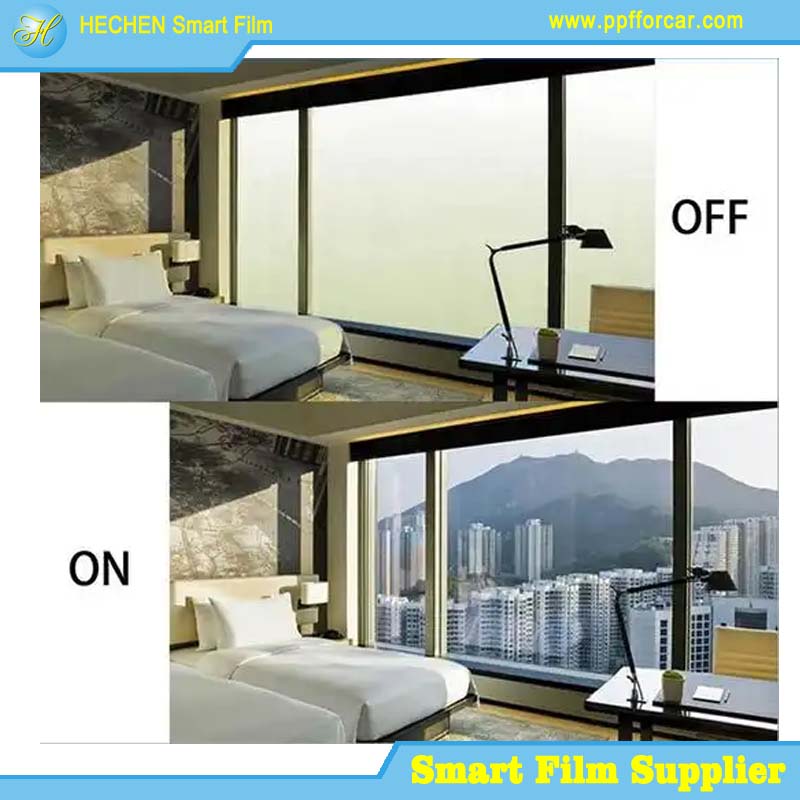
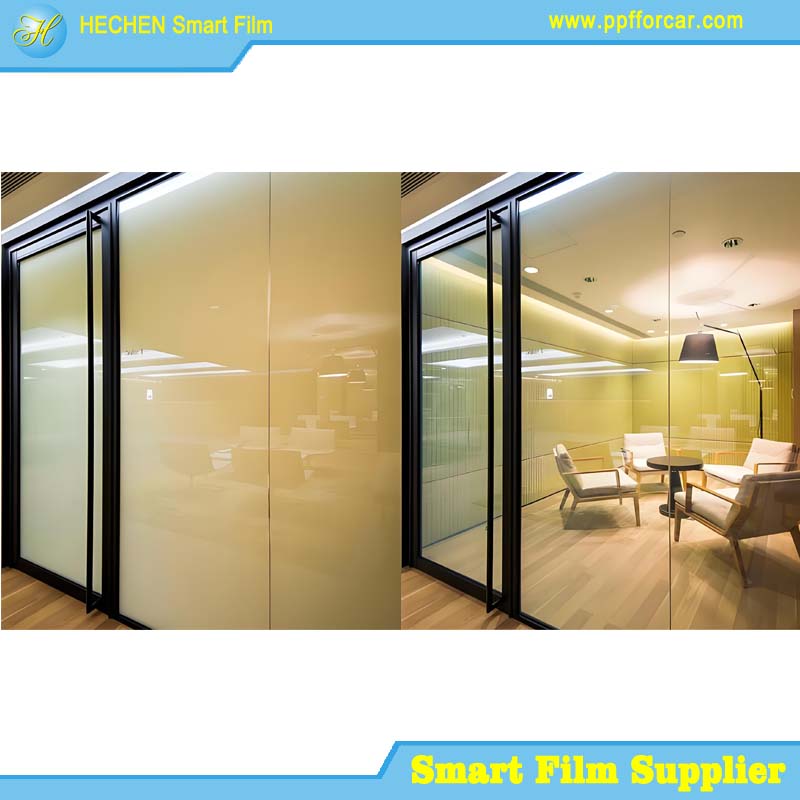
Smart film for conference room glass provides a practical way to add switchable visual privacy without completely replacing existing glass. Using Polymer Dispersed Liquid Crystal (PDLC) technology, the film can switch between a transparent state and a translucent or opaque privacy state when connected to a suitable electrical control system.
For renovation projects, self-adhesive smart film is particularly attractive because it can be applied directly to compatible existing glass. However, successful smart film installation requires careful measurement, glass preparation, electrical planning, busbar installation, transformer selection, and final commissioning.
This guide explains the main technical considerations involved in installing smart film on conference room glass, from determining glass compatibility to maintaining the completed system.
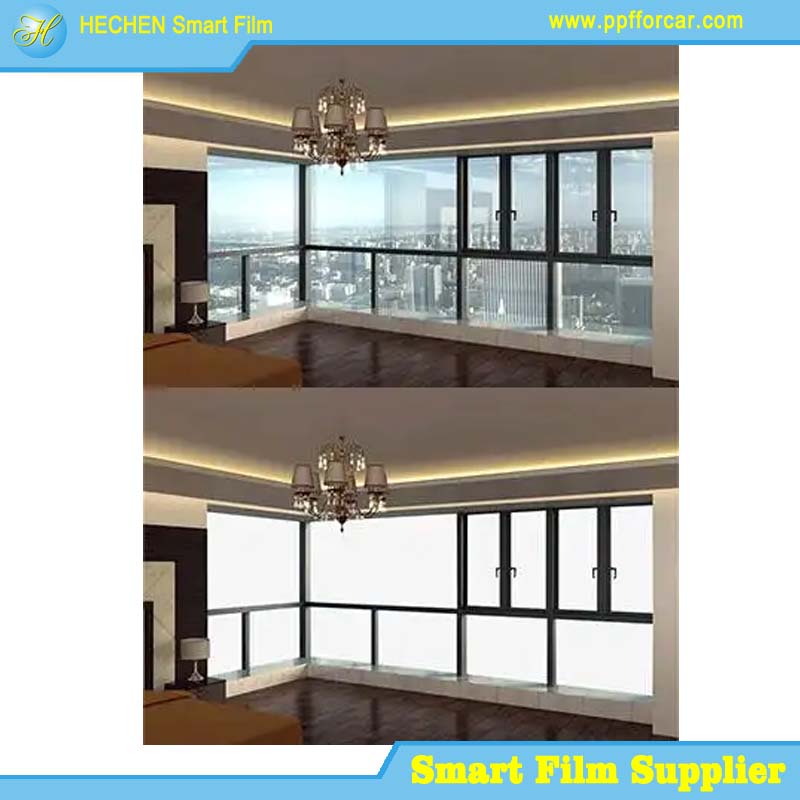
Can Smart Film Be Installed on Existing Conference Room Glass?
Yes, certain types of smart film are specifically designed for retrofit applications on existing glass. This makes PDLC film different from laminated smart glass, which is manufactured as an integrated glazing unit.
A retrofit smart film installation can be considered when an office already has suitable glass partitions, meeting room windows, glass doors, or internal glass walls but needs controllable privacy.
Typical retrofit applications include:
Conference room glass partitions
Executive meeting rooms
Boardroom glass walls
HR interview rooms
Glass office doors
Financial and legal consultation rooms
Training rooms
Healthcare consultation spaces
However, not every existing glass panel is automatically suitable. Before installation, the installer should check the glass condition, surface quality, dimensions, frame configuration, environmental conditions, and accessibility of the electrical connection.
The glass should be flat, structurally sound, clean, and compatible with the manufacturer's adhesive and installation requirements.
It is also important to determine whether the glass is suitable for the intended operating environment. Interior conference room applications are generally simpler than exterior glazing or high-moisture installations.
For commercial projects, the supplier should review the glass specifications before production rather than relying only on approximate measurements provided by the customer.
Self-Adhesive Smart Film vs. Laminated Smart Glass
Two common configurations are used for PDLC privacy applications: self-adhesive smart film and laminated smart glass.
Self-Adhesive Smart Film
Self-adhesive smart film is designed to be applied to the surface of existing compatible glass.
Its main advantage is retrofit flexibility. Instead of removing the existing glass partition, installers can apply the film directly to the glass surface, connect the busbar, and integrate the film with an electrical control system.
Potential advantages include:
Suitable for selected existing glass.
Less disruption during office renovation.
No need to replace the entire glazing unit in suitable applications.
Customizable film dimensions.
Suitable for conference room privacy upgrades.
However, the finished appearance depends heavily on installation quality. Dust, fingerprints, air bubbles, uneven adhesion, and incorrect electrical connections can affect the final result.
Laminated Smart Glass
Laminated smart glass incorporates the PDLC layer between glass substrates during manufacturing.
This configuration is commonly considered for new construction or projects where the glazing itself is being replaced.
Potential advantages include:
Factory-integrated construction.
Controlled manufacturing environment.
Greater architectural flexibility for new glazing.
Compatibility with customized glass structures.
Better integration into new building projects.
The main difference is therefore the installation approach. Self-adhesive smart film is generally considered for retrofit applications, while laminated smart glass is typically specified as part of a complete glazing system.
The correct option depends on the existing glass, project schedule, budget, architectural requirements, and desired long-term performance.
Glass Surface Preparation
Glass preparation is one of the most important stages of PDLC film installation.
The surface must be completely clean before applying the film. Dust, oil, fingerprints, silicone residue, adhesive contamination, and other particles can create visible defects underneath the film.
Before installation, the installer should:
Inspect the glass for scratches, cracks, chips, or surface damage.
Remove dust and loose contaminants.
Clean the glass using an appropriate non-abrasive cleaning method.
Remove oil, grease, and adhesive residue.
Allow the surface to dry completely.
Verify that the glass is free from particles before application.
The surrounding frame and working area should also be cleaned to prevent contamination during installation.
Installers should avoid using tools or cleaning chemicals that could damage the glass or interfere with the adhesive system.
For large conference room partitions, environmental control can also be important. Excessive dust, humidity, or uncontrolled airflow can make film installation more difficult.
The exact cleaning products and preparation procedure should always follow the smart film manufacturer's installation instructions.
Measuring Glass Panels and Film Dimensions
Accurate measurement is essential before ordering or cutting smart film.
The installer should measure the actual visible glass area rather than relying solely on architectural drawings. Glass dimensions can vary slightly from the original design drawings, particularly in renovation projects.
Measure:
Glass width
Glass height
Number of glass panels
Door dimensions
Frame position
Glass thickness where relevant
Busbar location
Electrical connection position
For large conference rooms with multiple panels, each panel should be measured individually.
This is particularly important because glass walls may appear identical but have small dimensional differences.
The film should not simply be ordered using one average measurement for all panels.
Film Orientation
PDLC film has electrical connection components that must be positioned correctly. The installer should determine the appropriate orientation before cutting or applying the film.
The busbar position should be coordinated with the nearest electrical connection point whenever possible.
A measurement drawing can be created showing:
Panel number
Width
Height
Film orientation
Busbar position
Cable exit location
Control zone
This approach reduces installation errors on multi-panel conference room projects.
Electrical Wiring and Busbar Position
Smart film is an electrically controlled product, so electrical planning should be completed before the film is installed.
A typical PDLC system includes:
Smart Film → Busbar → Wiring → Transformer/Power Supply → Controller → Switch
The exact configuration depends on the product.
Busbar Function
The busbar provides electrical contact between the external wiring and the conductive layer of the PDLC film.
When voltage is applied through the conductive system, the PDLC layer changes its optical state according to the product's operating characteristics.
Incorrect busbar installation can cause uneven switching or areas that do not respond correctly.
The busbar should therefore be installed according to the manufacturer's specified position and connection method.
Busbar Location
The preferred busbar location depends on the film design, panel orientation, frame structure, and electrical access.
For conference room glass, installers commonly plan the electrical connection near the frame or another concealed location to minimize visual impact.
The wiring should be protected and routed in a manner that prevents mechanical damage.
For doors or movable glass panels, additional consideration is required because the wiring must accommodate movement without excessive stress.
Transformer and Control System Requirements
The transformer is a critical part of the PDLC electrical system.
Smart film products can have different operating voltage and power requirements, so the transformer should never be selected based on assumptions about another manufacturer's film.
Before selecting a transformer, confirm:
Rated operating voltage
Power consumption per square meter
Total active film area
Number of panels
Number of control zones
Transformer capacity
Control interface compatibility
Single-Zone Control
A small conference room may use one control zone for all glass panels.
For example, one wall switch can change the entire conference room from transparent to privacy mode.
This configuration is relatively simple but does not provide independent control.
Multi-Zone Control
Large conference rooms may benefit from multiple control zones.
For example:
Zone 1: Entrance glass
Zone 2: Main conference wall
Zone 3: Presentation glass
Zone 4: Side partition
Multi-zone control allows users to select which glass panels should switch.
The transformer and controller must be designed to support the required configuration.
Smart Office Integration
Some PDLC systems can be integrated with compatible automation systems. Depending on the controller, users may be able to operate smart film using centralized building controls, wall switches, remote controls, or other supported interfaces.
Compatibility should be confirmed before installation. The smart film, transformer, controller, and automation system should be treated as one integrated electrical system.
Electrical installation should be performed by appropriately qualified personnel and in accordance with applicable local electrical regulations.
Installation Steps for Conference Room Glass
The following is a general installation sequence for smart film installation. Actual procedures should follow the specific manufacturer's installation manual.
Step 1: Inspect the Glass
Confirm that the glass is clean, intact, flat, and suitable for the selected smart film.
Step 2: Confirm Dimensions
Check the film dimensions against the actual glass panel before removing protective materials.
Verify orientation and busbar location.
Step 3: Clean the Surface
Thoroughly clean the glass and remove all dust, oil, fingerprints, and contaminants.
Step 4: Position the Film
Carefully position the smart film on the glass according to the installation instructions.
Avoid unnecessary folding, bending, or mechanical stress.
Step 5: Apply the Film
Apply the self-adhesive layer progressively rather than pressing the entire film onto the glass at once.
Use approved installation tools to minimize air bubbles and wrinkles.
Step 6: Connect the Busbar
Connect the busbar and electrical leads according to the manufacturer's wiring diagram.
The electrical connection should be secure and protected.
Step 7: Connect the Transformer
Connect the film system to the correctly specified transformer or power supply.
Do not energize the system until all electrical connections have been inspected.
Step 8: Connect the Controller
Connect the wall switch, remote controller, or compatible automation system.
For multiple zones, verify each zone independently.
Step 9: Test Switching
Test transparent and privacy modes.
Check whether the entire panel switches uniformly.
Step 10: Final Inspection
Inspect the finished installation for:
Air bubbles
Dust particles
Edge lifting
Scratches
Uneven switching
Visible wiring
Loose connections
Only after final inspection should the installation be considered complete.
Common Installation Problems and Solutions
Even high-quality smart film can experience problems when installation or electrical configuration is incorrect.
Problem 1: Film Does Not Switch
Possible causes include:
No electrical power.
Incorrect transformer.
Loose wiring.
Incorrect busbar connection.
Controller malfunction.
Check the electrical system systematically and compare the measured values with the manufacturer's specifications.
Problem 2: Uneven Switching
If part of the film becomes transparent while another area remains cloudy, possible causes include incorrect busbar installation, poor electrical contact, insufficient voltage, or film damage.
The installer should inspect the electrical connections and busbar system before assuming that the film itself is defective.
Problem 3: Air Bubbles
Air bubbles can result from poor application technique, surface contamination, or improper installation conditions.
Small imperfections may sometimes change during the curing or settling process, depending on the adhesive system. Persistent bubbles should be evaluated according to the manufacturer's installation requirements.
Problem 4: Dust Under the Film
Dust particles trapped between the glass and film can create visible spots.
This is usually a surface preparation or installation-environment issue.
The best solution is prevention through careful cleaning and controlled installation.
Problem 5: Edge Lifting
Edge lifting can result from contamination, insufficient adhesion, moisture exposure, mechanical stress, or unsuitable installation conditions.
The affected area should be inspected promptly to prevent further deterioration.
Problem 6: Different Panels Have Different Appearance
Multiple panels may appear slightly different if they use different film batches, glass specifications, lighting conditions, or installation configurations.
For large projects, ordering film for all panels from the same production batch where practical can help maintain visual consistency.
How to Maintain Smart Film After Installation
Proper maintenance can help preserve the appearance and performance of smart film.
Regular Surface Cleaning
Clean the film using the manufacturer's recommended cleaning procedure.
Avoid:
Abrasive materials
Aggressive chemicals
Sharp cleaning tools
Excessive water around electrical connection areas
A soft, non-abrasive cleaning material is generally preferable, subject to the manufacturer's instructions.
Protect Electrical Connections
The busbar and electrical connection area should remain protected from physical damage.
For self-adhesive smart film, special attention should be given to the film edges and connection points.
Check Switching Performance
For commercial conference rooms, periodically test the transparent and privacy modes.
Look for:
Delayed switching
Uneven switching
Non-switching sections
Flickering
Changes in appearance
If abnormal behavior occurs, the electrical system should be inspected.
Avoid Mechanical Damage
Furniture, doors, equipment, and cleaning tools should not strike or scratch the smart film.
Although PDLC film is designed for normal interior applications, it is still a functional film product and should be protected from unnecessary mechanical stress.
Follow Manufacturer Specifications
The manufacturer's maintenance instructions should take priority over generic cleaning recommendations.
Warranty conditions may also specify approved cleaning methods, environmental conditions, and installation requirements.
Installation FAQ
Can smart film be installed on existing conference room glass?
Yes, self-adhesive smart film can be installed on compatible existing glass in many retrofit applications. The glass condition, surface quality, dimensions, and electrical requirements should be checked first.
Is smart film installation difficult?
The process requires more precision than conventional decorative window film because PDLC film includes electrical components and requires busbar connections. Professional installation is recommended for commercial projects.
Can I install PDLC film myself?
Small projects may be technically possible for experienced installers, but commercial conference room installations should generally be handled by professionals familiar with electrical connections and PDLC film installation procedures.
Where should the smart film busbar be located?
The busbar location depends on the film construction, panel dimensions, orientation, and electrical design. It should be positioned according to the manufacturer's installation drawing.
Can smart film be installed on glass doors?
Some products can be used on compatible glass doors. However, movable doors require special attention to cable routing, mechanical movement, edge protection, and electrical connections.
How do I calculate transformer capacity?
Transformer capacity should be calculated from the manufacturer's specified power consumption, total active film area, operating voltage, and system configuration. Always use the supplier's technical data.
Can multiple conference room glass panels use one switch?
Yes, multiple panels can potentially be connected to one control zone if the transformer and controller are designed for the combined load. Larger installations may use multiple zones.
What should I do if part of the film does not become transparent?
First check the power supply, transformer, wiring, busbar connections, and controller. If the electrical system is operating correctly, the affected film area should be inspected for installation or product-related issues.
How long does smart film installation take?
Installation time depends on the number and size of glass panels, surface preparation, electrical routing, control-zone configuration, and site conditions. A small conference room can be significantly faster to install than a large multi-panel office project.
Does smart film require regular maintenance?
Routine maintenance is relatively straightforward, but the film surface, electrical connections, and switching performance should be checked periodically. Follow the manufacturer's cleaning and maintenance instructions.
Conclusion
Installing smart film for conference room glass requires careful coordination between the film, glass surface, electrical system, transformer, controller, and installation environment. For retrofit office projects, self-adhesive PDLC film can provide a practical method of adding switchable privacy to existing compatible glass without replacing the entire glazing system.
The most important stages of PDLC film installation include accurate measurement, thorough glass preparation, correct film positioning, proper busbar installation, suitable transformer selection, secure electrical connections, and systematic testing.
For commercial conference rooms, installation quality is particularly important because large glass areas can make small imperfections highly visible. Working with an experienced installer and a reliable smart film supplier can help reduce problems related to adhesion, switching uniformity, electrical compatibility, and long-term performance.
Before ordering retrofit smart film, provide the supplier with accurate glass dimensions, photographs or drawings of the installation area, electrical requirements, and the desired control configuration. Request technical specifications, installation instructions, samples, and warranty information to ensure that the selected system is suitable for the project.
With correct product selection and professional installation, PDLC smart film can transform conventional conference room glass into a controllable visual privacy solution while preserving the modern appearance of glass-based office architecture.
Recommended linking:
Smart Film for Conference Rooms: The Complete Privacy Solution for Modern Offices
Recommend related products:
Smart Film For Conference Rooms