Smart Film for Office Partitions: Create Flexible Privacy Without Blocking Natural Light
Modern workplaces are moving toward open, bright, and flexible environments. Glass walls and partitions are widely used in offices because they create visual openness, allow natural light to penetrate deeper into the workspace, and support modern architectural design.
However, transparent glass also creates a privacy challenge. A meeting room may need to remain visually connected to the rest of the office during normal working hours, but it may require complete visual privacy during confidential meetings.
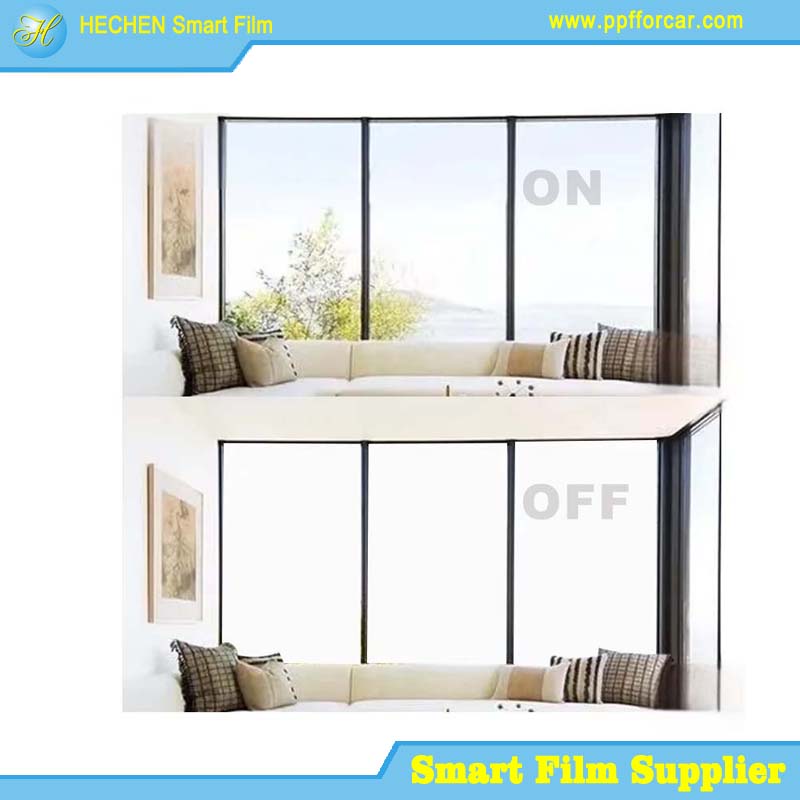
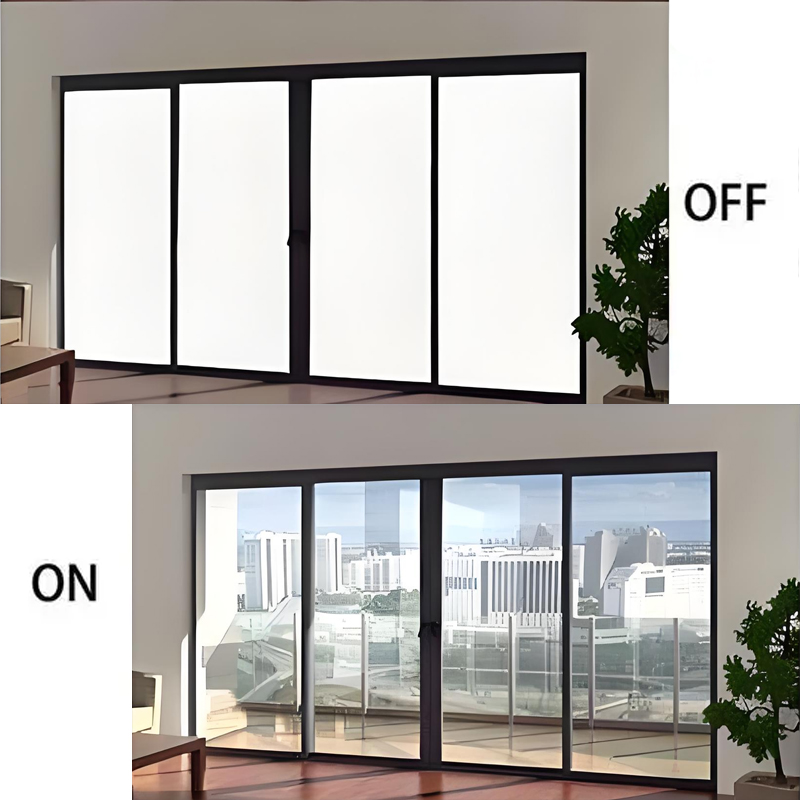
Smart film for office partitions provides a practical solution to this problem. By using electrically switchable PDLC technology, ordinary office glass can change between a transparent state and a frosted privacy state within seconds.
Unlike conventional blinds or permanently frosted film, office smart film allows businesses to control privacy without completely blocking natural light or changing the architectural appearance of the glass.
This makes smart film office partition systems increasingly attractive for conference rooms, executive offices, HR departments, finance offices, legal departments, negotiation rooms, and other commercial spaces.
Why Traditional Office Partitions Have a Privacy Problem
Glass partitions have become a standard feature of modern office architecture. They provide transparency between departments, improve daylight distribution, and make relatively small offices appear more spacious.
However, the same transparency that creates an open environment can become a disadvantage when privacy is required.
For example, a conference room may be transparent when employees are checking whether the room is occupied. Once a confidential meeting begins, however, people inside may not want presentations, documents, or discussions to be visible from outside.
The same requirement exists in several other departments.
HR Offices
Human resources departments regularly handle confidential employee information, interviews, salary discussions, and disciplinary meetings. A transparent glass office can create unnecessary visual exposure.
Finance Departments
Financial discussions, budgets, contracts, and sensitive business information may require visual privacy.
Legal Offices
Law firms and corporate legal departments often conduct confidential discussions with employees, clients, or management teams.
Executive Offices
Executives may want visual connection with employees during normal operations while requiring privacy for strategic discussions.
Negotiation Rooms
Client negotiations and supplier meetings may involve commercially sensitive information. A switchable privacy solution allows the room to remain open when appropriate and private when necessary.
Traditional privacy solutions do not provide this flexibility.
Curtains and blinds need to be manually or mechanically adjusted. Frosted glass remains permanently private. Conventional privacy film also creates a fixed visual barrier.
Therefore, modern offices increasingly require a solution that can change according to the situation.
How Smart Film Transforms Glass Office Partitions
Smart privacy film for office applications is typically based on PDLC, or Polymer Dispersed Liquid Crystal, technology.
PDLC film contains a liquid crystal layer positioned between transparent conductive layers. When electrical power is applied, the liquid crystal molecules align, allowing light to pass through the film.
The glass becomes visually transparent.
When the power is switched off, the liquid crystals return to a random orientation. Incoming light is scattered, producing a frosted or translucent appearance.
The operating principle can therefore be summarized as:
Power ON → Liquid crystals align → Light transmission increases → Clear state
Power OFF → Liquid crystals become randomly oriented → Light scatters → Privacy state
This switching process makes smart film for office partitions fundamentally different from traditional window film.
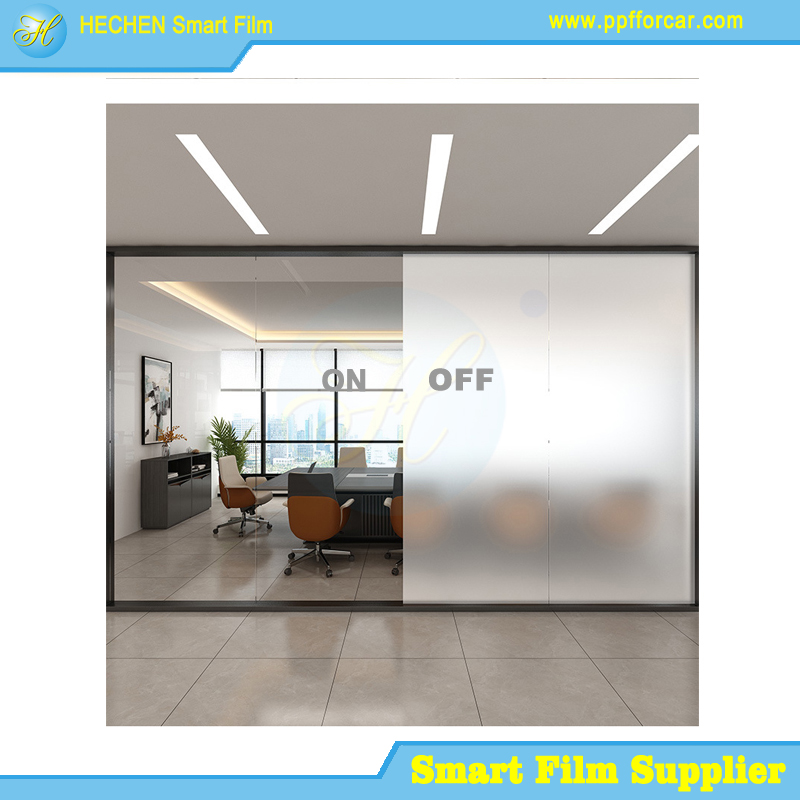
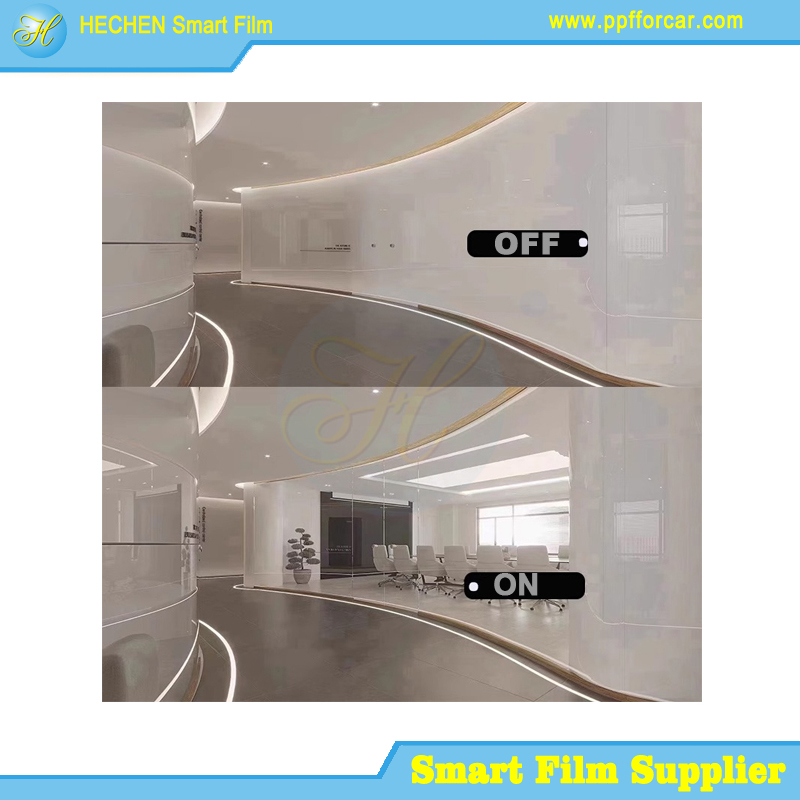
Clear State
In the clear state, the office partition remains visually open.
Employees can see through the glass, natural daylight can enter the room, and the office maintains a modern open-plan appearance.
Privacy State
When privacy is required, the film switches to its frosted state.
The partition becomes visually opaque or translucent, reducing direct visibility into the room.
Depending on the product specification, switching can be controlled using:
Wall switches
Remote controls
Wireless controllers
Timers
Sensors
Centralized control systems
Building automation systems
For large commercial projects, multiple film panels can also be divided into independent control zones.
This means one conference-room wall could be divided into several sections, allowing users to control the entire wall simultaneously or activate individual zones.
Best Applications for Smart Film Office Partitions
The versatility of PDLC office partition systems makes them suitable for many commercial environments.
1. Meeting Rooms
Meeting rooms are one of the most common applications.
During normal office operations, transparent glass allows employees to see whether a room is occupied. When a private meeting starts, the glass can switch to the privacy state.
This provides visual privacy without installing curtains or permanent frosted glass.
2. Executive Offices
Executive offices often require a balance between accessibility and privacy.
An executive can maintain visual contact with the office when the glass is clear and activate privacy mode for confidential conversations.
3. HR Departments
HR offices handle highly sensitive employee information.
Installing smart privacy film for office glass allows HR personnel to create visual privacy during interviews, employee meetings, and confidential discussions.
4. Finance Departments
Finance teams can use switchable glass to protect the visual confidentiality of financial reports, screens, documents, and internal meetings.
5. Legal Offices
Legal departments and law firms can use privacy film for glass partitions to create private consultation spaces without constructing permanent solid walls.
6. Negotiation Rooms
Negotiation rooms can remain transparent when they are not being used and become private when sensitive business discussions take place.
7. Collaborative Spaces
Not every office needs permanent privacy.
A collaborative workspace may benefit from transparent glass during brainstorming sessions but require privacy when a smaller team needs to focus.
A switchable office partition allows the same physical space to serve multiple purposes.
Smart Film vs Curtains for Office Partitions
Curtains remain a common privacy solution, but they have several limitations in modern commercial interiors.
| Feature | Smart Film | Curtains |
|---|---|---|
| Instant privacy switching | Yes | No |
| Maintains glass appearance | Yes | No |
| Blocks natural light when privacy is required | Limited light transmission | Usually significant |
| Physical obstruction | None | Yes |
| Remote control | Available | Depends on motorized system |
| Modern minimalist appearance | Excellent | Moderate |
| Cleaning requirements | Low | Higher |
| Integration with automation | Possible | Possible |
| Retrofit existing glass | Yes, depending on glass | Yes |
The biggest difference is that office smart film becomes part of the glass itself.
Curtains occupy physical space and can visually divide a room. They may also accumulate dust and require periodic cleaning or replacement.
Smart film maintains a cleaner architectural appearance.
However, buyers should understand that PDLC smart film is primarily a visual privacy technology. It should not be selected as a replacement for acoustic insulation, security glazing, or physical barriers when those functions are required.
Self-Adhesive Smart Film for Existing Office Partitions
One of the strongest commercial advantages of smart film is its retrofit capability.
Many offices already have glass partitions installed. Replacing the complete glass system with laminated smart glass can increase project cost, construction time, and installation complexity.
Self-adhesive smart film for existing office partitions provides another option.
The film can be applied directly to a suitable glass surface, transforming existing glazing into switchable privacy glass.
This makes retrofit smart film particularly attractive for:
Office renovations
Existing conference rooms
Commercial buildings
Coworking spaces
Hotels
Training centers
Corporate headquarters
Before installation, the existing glass should be evaluated carefully.
Important factors include:
Glass thickness
Surface condition
Existing coatings
Glass dimensions
Frame configuration
Temperature conditions
Edge accessibility
Electrical cable routing
The glass must be thoroughly cleaned before installation because dust, oil, and other contaminants can affect adhesive bonding and visual quality.
Self-adhesive smart film is particularly valuable for B2B projects because it can reduce the need to remove and replace existing glazing.
However, retrofit installation should still be professionally planned, especially for large glass walls.
How to Install Smart Film on Office Partitions
Correct installation is essential for the optical performance and service life of a smart film system.
Step 1: Measure the Glass
Accurate measurements should be taken before ordering the film.
The supplier should receive the exact width and height of each glass panel, together with information about required shapes, corners, cutouts, and cable locations.
Step 2: Inspect and Clean the Glass
The glass surface must be free from dust, oil, silicone contamination, and other particles.
Any surface defects should be identified before installation.
Step 3: Position the Film
The smart film is carefully aligned with the glass.
For large panels, installers should pay particular attention to film orientation, edges, and busbar positioning.
Step 4: Apply the Film
For self-adhesive products, the protective liner is removed gradually while the film is applied to the glass.
Special installation tools are used to reduce air bubbles, wrinkles, and trapped contaminants.
Step 5: Connect the Busbar
The conductive busbar provides the electrical connection between the smart film and the power system.
Busbar placement should follow the manufacturer's technical instructions.
Step 6: Connect the Transformer and Controller
The film must be connected to a compatible transformer or power controller.
For larger projects, the electrical system may contain multiple transformers and independent control zones.
Step 7: Test Switching Performance
The installer should test the film repeatedly between clear and privacy states.
The entire panel should switch consistently without abnormal areas, flickering, or visible electrical defects.
Step 8: Complete Edge Treatment
Proper edge finishing can help protect the film and electrical components from moisture, contamination, and mechanical damage.
For commercial projects, electrical connections should comply with applicable local electrical requirements.
How to Choose Smart Film for Large Office Projects
Selecting smart film for office partitions for a large B2B project requires more than comparing price per square meter.
Procurement teams should evaluate the entire supply chain, including customization, electrical components, installation support, warranty, and production capacity.
Roll Width
Roll width determines how efficiently the supplier can manufacture and install large glass panels.
Ask the supplier about standard roll widths and whether wider film can be supplied for large partitions.
Custom Size
Large office projects often contain different glass dimensions.
Confirm whether the manufacturer provides custom cutting and panel sizing.
Electrical System
Check the film's operating voltage, power consumption, busbar design, wiring method, and controller requirements.
The electrical specifications should be compatible with the project's local power infrastructure.
Transformer Quantity
Large projects may require multiple transformers.
The number depends on the total film area, panel configuration, electrical specifications, and control architecture.
A professional supplier should provide a clear wiring diagram and transformer configuration.
Control Zones
Consider how the office will actually use the glass.
For example, a conference room may require one control zone, while a large corporate office could require separate zones for different departments or glass panels.
Installation
Ask whether the supplier provides installation instructions, technical documentation, wiring diagrams, and remote technical support.
For large projects, installation quality can have a major impact on the final result.
MOQ
For B2B buyers, minimum order quantity is another important consideration.
A manufacturer may offer different MOQ requirements for:
Standard products
Custom dimensions
Custom colors
Printed designs
OEM projects
Special electrical configurations
Before placing an order, confirm the MOQ and whether mixed sizes or models can be included in one order.
Sample
A sample is strongly recommended before purchasing large quantities.
A professional sample evaluation should examine:
Clear-state transparency
Privacy-state appearance
Haze
Switching speed
Surface quality
Adhesive performance
Electrical connection
Overall visual uniformity
For large commercial projects, requesting a sample can significantly reduce procurement risk.
Warranty
Warranty terms should be reviewed carefully.
Buyers should clarify:
Warranty period
Covered defects
Electrical component warranty
Film performance requirements
Installation-related exclusions
Replacement procedures
The best supplier is not necessarily the one offering the lowest initial price. For large office projects, product consistency, technical support, customization capability, and long-term reliability are equally important.
FAQs
What is smart film for office partitions?
Smart film for office partitions is an electrically switchable film, commonly based on PDLC technology, that allows office glass to change between transparent and privacy states.
Can smart film be installed on existing office partitions?
Yes. Self-adhesive PDLC film can be applied to suitable existing glass, making it a practical solution for office renovation and retrofit projects.
Does smart film block natural light?
In the transparent state, smart film allows light to pass through. In the privacy state, the film scatters light rather than functioning like a completely opaque curtain.
The exact optical performance depends on the product's visible light transmission and haze specifications.
How quickly can an office partition switch?
Switching speed varies according to film construction, panel size, temperature, power system, and manufacturer specifications. Buyers should request actual technical data from the supplier rather than relying on generic claims.
Can smart film be controlled by a remote?
Yes. Depending on the control system, smart film can be operated using remote controls, wall switches, wireless controllers, timers, sensors, or building automation systems.
Is PDLC office partition technology suitable for large conference rooms?
Yes, but large projects require careful planning of film dimensions, panel segmentation, busbar placement, transformers, wiring, and control zones.
What is the difference between smart film and smart glass?
Smart film is generally installed onto existing glass, while laminated smart glass incorporates the switchable layer into the glass unit during manufacturing.
For retrofit projects, self-adhesive smart film can be particularly convenient. For new construction, laminated smart glass may be considered depending on architectural requirements.
Can smart film provide soundproofing?
Smart film is primarily designed for visual privacy and should not be treated as a dedicated acoustic insulation product. If sound privacy is important, the glass partition should be specified with an appropriate acoustic glazing and framing system.
How should businesses choose a smart film supplier?
For a commercial project, compare technical specifications, sample quality, customization capability, production capacity, MOQ, electrical support, installation guidance, warranty, and after-sales service rather than comparing price alone.
Can smart film be customized for corporate offices?
Depending on the manufacturer, smart film can potentially be customized in dimensions, panel configuration, control zones, shapes, and decorative designs. Buyers should discuss customization requirements with the supplier before production.
Conclusion
Smart film for office partitions provides a practical way to combine transparency, natural light, and on-demand visual privacy in modern workplaces.
Instead of choosing between permanently transparent glass and permanently private glazing, businesses can use PDLC technology to create a switchable office partition that adapts to changing workplace requirements.
The technology is particularly suitable for meeting rooms, executive offices, HR departments, finance departments, legal offices, negotiation rooms, and collaborative spaces.
For existing office partitions, self-adhesive smart film offers an attractive retrofit solution because it can transform suitable glass without necessarily replacing the complete glazing system.
For large B2B projects, however, successful implementation depends on more than the film itself. Buyers should carefully evaluate roll width, custom size, electrical specifications, transformer requirements, control zones, installation support, MOQ, samples, warranty, and supplier capabilities.
When properly specified and installed, smart privacy film for office applications can help create flexible workspaces that preserve the openness of glass while providing privacy exactly when it is needed.
For architects, contractors, office developers, and commercial buyers, smart film is therefore not simply a privacy product—it is a flexible architectural glazing technology that allows office spaces to adapt to different activities throughout the working day.
Recommended linking:
Smart Film for Office: Complete Guide to Smart Privacy Glass for Modern Workspaces
Recommend related products:
Switchable PDLC Film For Office