High-Transparency Self-Adhesive Dimming Films - Understanding Their Optical Performance
Self-adhesive dimming films represent a significant advancement in smart window technology, offering users the ability to control light and privacy with remarkable ease. These innovative films are transforming windows from static architectural elements into dynamic interfaces that adapt to changing needs. This article explores two critical optical parameters that define the performance of these films: the maximum light transmittance achieved in the transparent state and the haze range maintained in the opaque state.
Introduction to Self-Adhesive Dimming Films
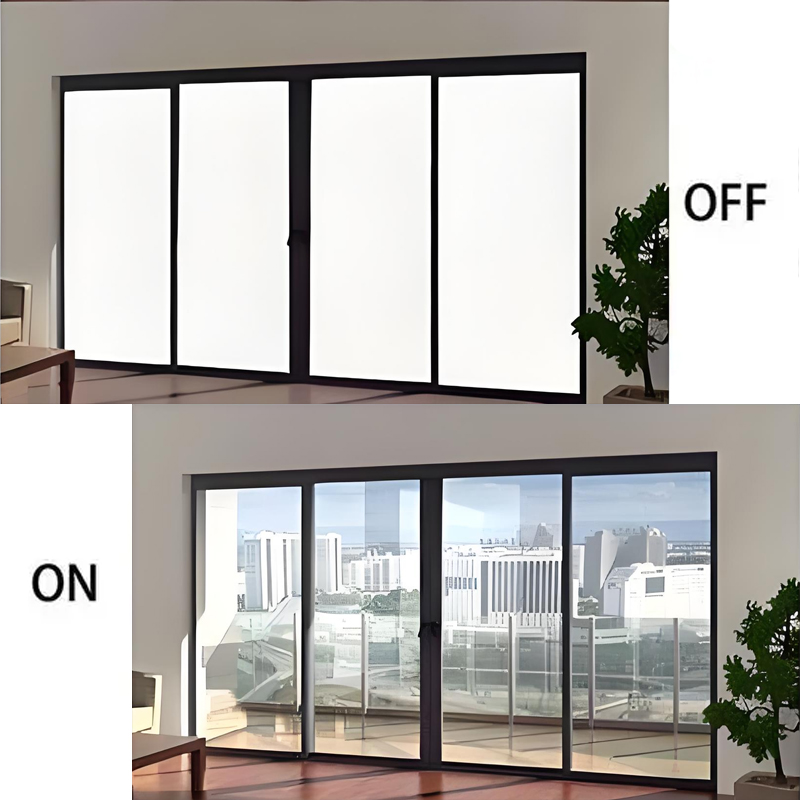
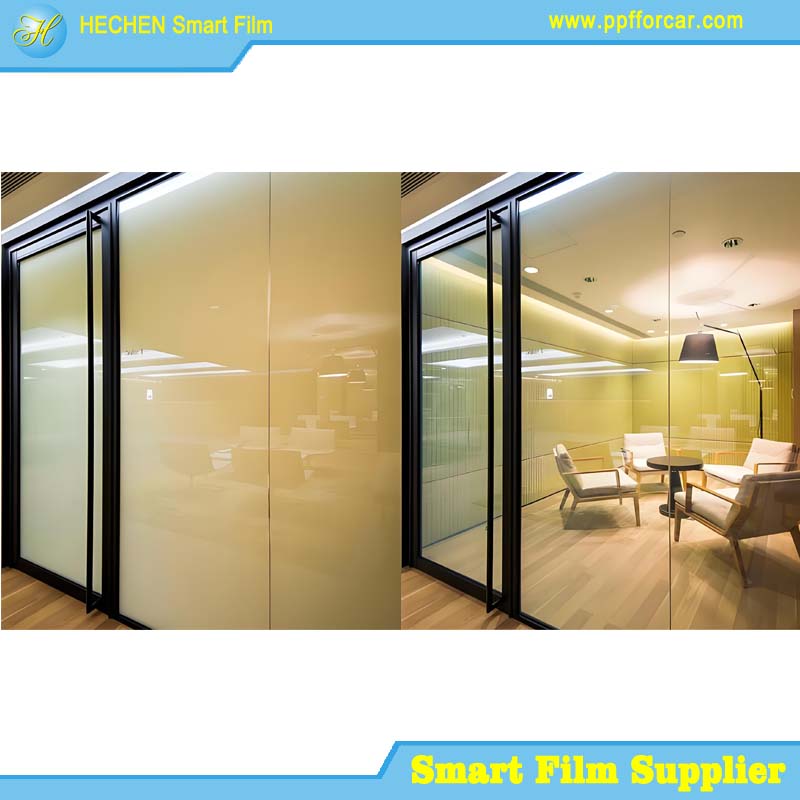
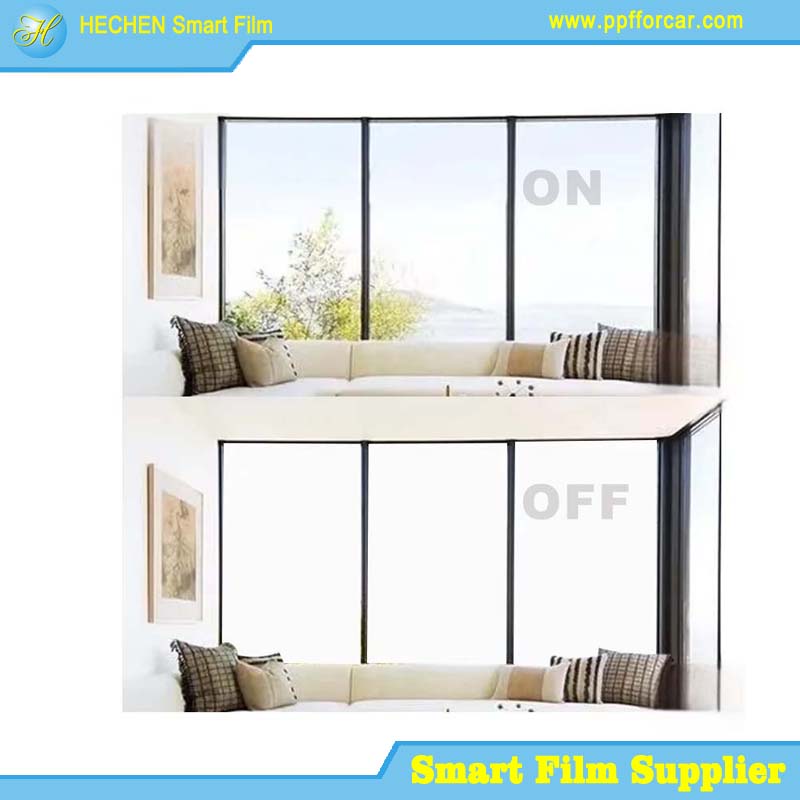
Self-adhesive dimming films are typically multilayer composites that can be applied directly to existing glass surfaces, turning ordinary windows into smart, switchable barriers for light and privacy. The core technology often involves a polymer-dispersed liquid crystal (PDLC) layer sandwiched between transparent conductive electrodes. When no voltage is applied, the liquid crystal molecules are randomly oriented, scattering light and creating an opaque, translucent appearance. When voltage is applied, the molecules align, allowing light to pass through and creating a transparent state.
Optical Performance in the Transparent State: Maximum Light Transmittance
The transparent state's effectiveness hinges on maximum light transmittance, a measure of the percentage of visible light that passes through the film. A higher transmittance is crucial for preserving natural daylighting, maintaining outdoor views, and ensuring the film's suitability for applications where visual clarity is paramount, such as retail displays or architectural glazing.
Data from patents and research indicate that high-performance self-adhesive dimming films can achieve impressive transmittance values. One patent for a self-adhesive dimming film describes using outer protective layers and conductive films with transparency up to 95% and light transmittance up to 93-94% for individual components. In a finished, operational device, a more recent study on a flexible PDLC smart window reported a visible light transmittance of about 80% in the powered "on" (transparent) state.
For broader context, advanced smart window films designed for energy conservation aim for a visible light transmittance greater than 70% to balance indoor brightness with solar heat blocking. Another product description for an adaptive dimming film notes that its visible light transmittance can be designed and adjusted within a range of 80% down to 10%, with a transmittance difference before and after dimming exceeding 50%.
Table: Optical Performance Ranges of Dimming Film Technologies
Technology Type | Max. Light Transmittance (Transparent State) | Typical Haze Range (Opaque State) | Primary Control Mechanism |
Polymer-Dispersed Liquid Crystal (PDLC) | ~75% - 80% | Very High (often >90%) | Electrical (Voltage) |
Electrochromic | ~60% - 80% | Variable | Electrical (Voltage) |
Thermochromic / Photothermal Adaptive | Up to 80% | High | Temperature / Sunlight |
Performance in the Opaque State: The Role of Haze
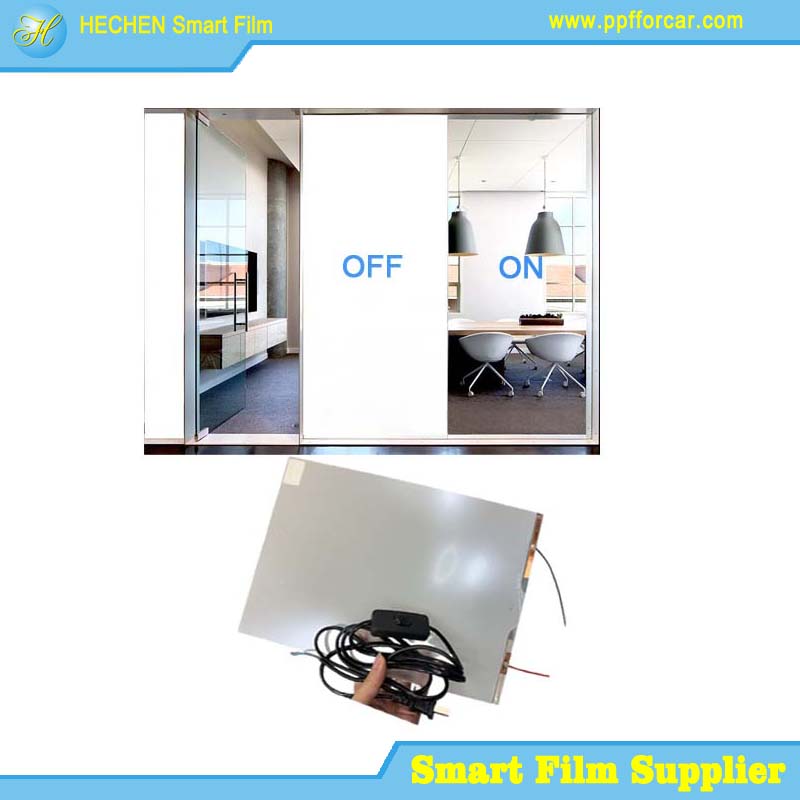
In the opaque state, the film's primary function shifts from clarity to privacy and light diffusion. This is quantified by haze, which measures the percentage of transmitted light that is scattered, deviating from the incident beam by more than 2.5 degrees. A higher haze value results in greater visual obscuration, creating a "frosted glass" effect.
For dimming films in the opaque (off) state, haze is typically controlled at very high levels. One light diffusion film technology is characterized by achieving a haze of not less than 96% while maintaining a total light transmittance over 66%. This demonstrates the film's exceptional ability to scatter light almost completely, ensuring strong privacy. Research into composite films using silica nanofibers has also demonstrated the ability to achieve ultrahigh optical haze up to 94%.
It's important to distinguish between inner haze and outer haze. Inner haze is caused by light scattering within the bulk of the film due to differences in refractive index between materials (e.g., liquid crystal droplets and polymer matrix). Outer haze is caused by surface roughness. In privacy applications, high total haze is the goal, often dominated by the internal scattering mechanism inherent to PDLC technology.
Beyond Transparency and Haze: Other Optical Properties
A comprehensive evaluation of a dimming film's optical performance includes several other key metrics:
UV and NIR Blocking: Modern energy-saving dimming films often incorporate functional nanomaterials to block ultraviolet (UV) and near-infrared (NIR) radiation. One energy-conserving composite film offers >90% UV blocking and >70% NIR blocking while maintaining >70% visible light transmittance. Similarly, a dual-functional PDLC film was reported to absorb up to 90% of near-infrared light, significantly reducing solar heat gain.
Clarity and Diffusion: A film with high total transmittance can still distort images if it scatters light unevenly. Some advanced light diffusion films are engineered to have a parallel light transmittance of not more than 2.0%, ensuring very uniform, glare-free diffusion.
Durability and Stability: Optical properties must remain stable over time and under environmental stress. High-performance adhesive films are designed with materials that ensure stable properties and good retention ability.
Applications Dictating Optical Requirements
The required balance between transmittance and haze varies significantly by application:
Commercial and Residential Buildings: For smart windows in offices and homes, the priority is often a wide switching range—high transparency (70-80%) for views and daylighting, and high haze (>90%) for instant privacy and glare reduction. Energy-saving features like NIR blocking are major bonuses.
Display and Projection Systems: For projection screens or transparent displays, the film may operate primarily in a diffusive state. Here, a very high haze (>96%) paired with controlled total transmittance is critical to create a bright, sharp image.
Specialty Applications: In automotive sunroofs or greenhouse panels, a photothermal adaptive property is valuable, where the film automatically increases haze in response to intense sunlight and temperature rise (e.g., within a 30–50°C response range), providing passive energy savings.
The Future of Dimming Film Optics
Research is pushing the boundaries of what dimming films can achieve. The integration of novel transparent conductive electrodes like silver nanowires (Ag NWs) is a key trend, offering higher flexibility and comparable or better transmittance than traditional indium tin oxide (ITO). Furthermore, the development of multi-functional films that combine dimming with radiative cooling, self-cleaning (superhydrophobic surfaces), and enhanced photocatalytic activity for air purification represents the next frontier.
Manufacturing innovations also play a role. The self-adhesive design itself, featuring pressure-sensitive adhesive layers, is a major usability advancement. It allows for convenient and rapid bonding, enables DIY installation and replacement, and facilitates application on curved surfaces, greatly expanding the potential use cases.
In conclusion, the optical performance of high-transparency self-adhesive dimming films is defined by a balance between two key states. In the transparent state, maximum light transmittance typically ranges from 75% to over 80% for leading PDLC-based films, a figure continually optimized through material science. In the opaque state, haze is controlled at very high levels, often exceeding 90% and reaching up to 96% or more, to ensure effective privacy and light diffusion. As this technology evolves, driven by nanomaterials and smarter designs, these films are set to become even more efficient, functional, and integral to sustainable and responsive built environments.
For more about high-transparency self-adhesive dimming films - understanding their optical performance, you can pay a visit to Hechen PDLC Smart Film Manufacturers for more info.