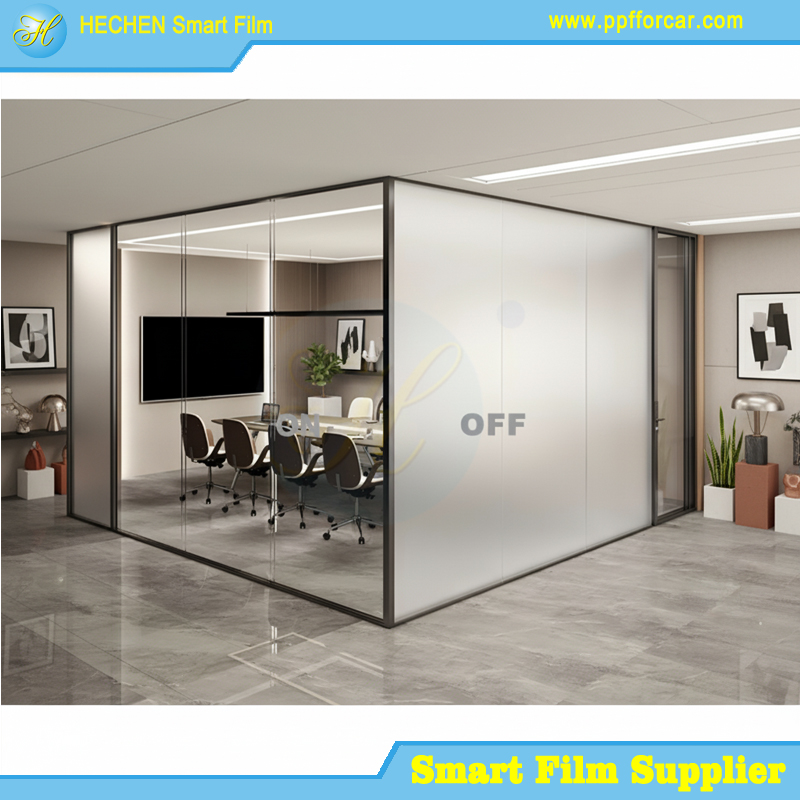
Instant Privacy at the Flick of a Switch: Best PDLC Film for Office Partitions
In today's dynamic workplace, the ability to balance open collaboration with private focus has become a defining challenge of office design. Glass partitions have long been favored for their ability to create a sense of openness and transparency, but they offer little in the way of visual privacy. Enter PDLC switchable film—a technology that transforms ordinary glass into an intelligent surface capable of providing instant privacy at the flick of a switch. This article explores why PDLC film has become the preferred solution for office partitions, what to look for when selecting a product, and how to integrate this technology into your workspace.
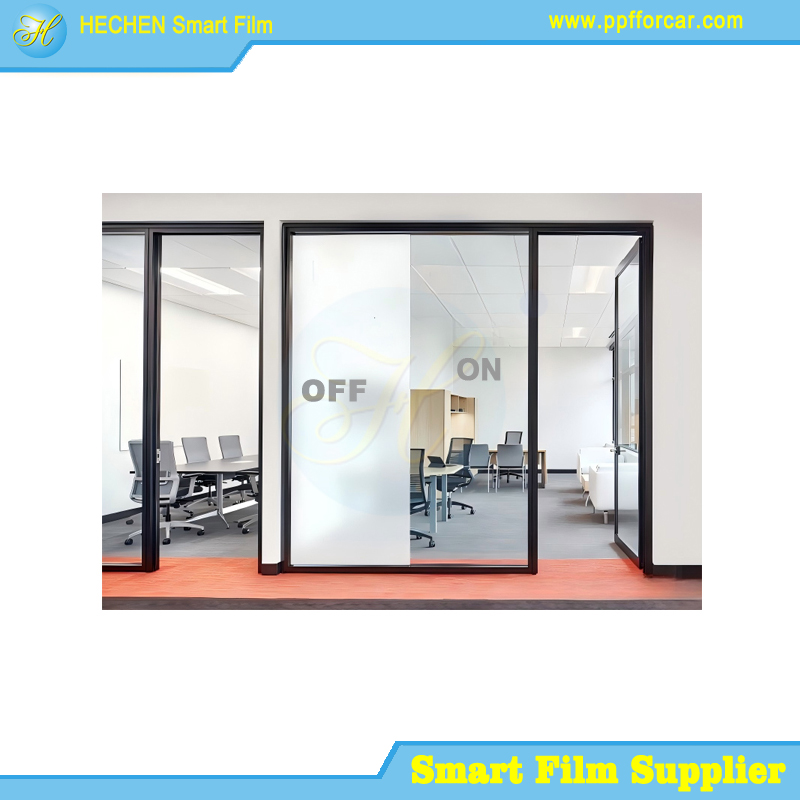
The Modern Office Challenge: Balancing Transparency and Privacy
Contemporary office design has increasingly embraced open floor plans, glass-walled conference rooms, and transparent partitions. These elements create an environment that feels spacious, collaborative, and inviting. However, they come with a significant drawback: a lack of visual privacy. Sensitive meetings, confidential conversations, and focused work sessions require moments of seclusion that traditional glass cannot provide.
Conventional solutions such as blinds, curtains, or frosted film offer privacy but at the cost of permanently sacrificing transparency. Manual blinds require physical operation, can be noisy, and often become a maintenance headache. Static frosted film eliminates the ability to see through the glass altogether, undermining the design intent of openness.
PDLC switchable film solves this dilemma by offering the best of both worlds—transparency when you need openness, and instant privacy when you need seclusion.
Understanding PDLC Technology for Office Applications
PDLC, or Polymer Dispersed Liquid Crystal, technology is the foundation of switchable privacy film. The film consists of a thin layer of liquid crystal droplets suspended within a polymer matrix, sandwiched between two transparent conductive layers and bonded to durable polyester substrates.
When no electrical current is applied, the liquid crystals are randomly oriented, scattering light and creating a frosted, opaque appearance that provides complete visual privacy. When an electrical current is applied, the crystals align uniformly, allowing light to pass through and rendering the film transparent. This transformation occurs almost instantaneously—typically within milliseconds—and is completely silent.
For office partitions, this technology offers several distinct advantages:
Immediate Privacy Control: With the flip of a switch, a voice command, or an automated schedule, glass partitions transition from clear to opaque. This empowers employees and meeting participants to control their environment without disruption.
Preservation of Natural Light: Unlike mechanical blinds or curtains that block light when closed, PDLC film in its opaque state continues to transmit ambient light. The space remains bright and inviting even when privacy is activated, reducing reliance on artificial lighting.
Professional Aesthetic: The frosted appearance of the film in privacy mode is uniform, sophisticated, and complements contemporary office design. There are no cords, no hardware, and no visual clutter.
Dual-Function Capability: When in the opaque state, PDLC film can serve as a projection surface, making it ideal for conference rooms where presentations and privacy are both required.
What Makes PDLC Film Suitable for Office Partitions
Not all PDLC films are created equal. When selecting a product for office partitions, several performance characteristics should be evaluated to ensure it meets the demands of a professional environment.
Optical Clarity in Transparent State
In the transparent state, the film should approach the clarity of clear glass. High-quality PDLC film achieves visible light transmission of 75% to 85%, with minimal haze. The lower the haze, the less noticeable the film becomes, preserving the intended transparency of the glass partition. For office applications where sightlines and visual continuity are important, selecting a film with superior optical clarity is essential.
Privacy Uniformity in Opaque State
When privacy is activated, the film should provide consistent, uniform opacity across the entire surface. Inconsistent performance—manifesting as spots, streaks, or uneven frosting—is both visually distracting and functionally inadequate for sensitive meetings. Quality control in manufacturing ensures uniform liquid crystal distribution, which translates to reliable privacy performance.
Switching Speed and Reliability
In a fast-paced office environment, delays in switching can be frustrating. Quality PDLC films switch in well under one second, providing the instant response that users expect. Additionally, the film should maintain consistent performance over thousands of switching cycles, with a typical lifespan exceeding 100,000 operations.
UV Blocking and Energy Efficiency
PDLC film naturally blocks 98% to 99% of harmful ultraviolet radiation, protecting interior finishes, furnishings, and occupants from UV exposure. Additionally, the film can reduce solar heat gain when in the opaque state, contributing to energy efficiency and occupant comfort. For office partitions with significant sun exposure, this benefit adds measurable value.
Acoustic Performance
While PDLC film itself does not provide acoustic insulation beyond the base glass, it does not degrade the existing acoustic properties of the partition. When applied to appropriate glass thickness, the combination maintains the sound isolation characteristics required for confidential conversations and focused work.
Durability and Longevity
Office partitions see constant use, and the film must withstand regular cleaning and incidental contact. Quality PDLC films feature durable polyester substrates that resist scratching and yellowing over time. With proper installation and maintenance, a typical lifespan of 10 to 15 years can be expected.
Types of PDLC Solutions for Office Partitions
When specifying PDLC for office partitions, there are two primary approaches to consider:
Self-Adhesive Retrofit Film
Self-adhesive PDLC film is applied directly to existing glass partitions. This approach is ideal for retrofitting spaces without replacing the glass. Installation can be completed with minimal disruption to office operations, typically over a weekend or after hours. The film connects to a low-voltage power supply, and electrical wiring can be integrated into existing frames or surface-mounted with discreet trunking.
Retrofit film offers the advantage of preserving existing glass and frames, making it a cost-effective option for upgrading leased spaces or existing offices. It can be removed if necessary, though removal typically requires professional service.
Laminated Smart Glass Units
For new construction or major renovations, laminated smart glass integrates the PDLC layer between two panes of glass within a sealed insulated glass unit. This approach offers superior durability, as the active layer is protected from environmental exposure and cleaning chemicals. Laminated units also allow for additional performance enhancements such as low-emissivity coatings, gas fills, and enhanced acoustic insulation.
Laminated smart glass provides a completely seamless appearance, with no visible film edges or electrical connections on the glass surface. While more expensive and requiring full glass replacement, it represents the premium solution for permanent installations.
Control Options for Office Environments
The way PDLC film is controlled significantly impacts the user experience and should be carefully considered during the specification process.
Manual Switches
Simple wall-mounted switches provide reliable, cost-effective control. For individual conference rooms or private offices, a discreet switch near the entrance allows users to activate privacy as needed. Switches can be designed to match the office aesthetic, including low-profile, stainless steel, or custom finishes.
Remote Controls
Wireless remote controls offer flexibility for spaces where wall-mounted switches are impractical. Multiple panels can be controlled from a single remote, allowing facility managers or users to manage privacy across several partitions simultaneously.
Occupancy and Motion Sensors
For spaces that require privacy only when occupied—such as phone booths, focus rooms, or consultation spaces—motion sensors can automate the switching process. The glass transitions to opaque when someone enters and returns to transparent when the space is vacated. This hands-free approach enhances convenience and can reduce energy consumption.
Integration with Building Management Systems
In modern smart buildings, PDLC film can be integrated with building management systems, allowing centralized control, scheduling, and automation. Conference rooms can be programmed to automatically switch to privacy mode during scheduled meetings. Facility managers can monitor system status and receive alerts for any performance issues.
Voice Control and IoT Integration
Increasingly, PDLC film can be integrated with voice assistants and IoT platforms, allowing users to control privacy with simple voice commands. "Privacy on for the main conference room" can activate the film without anyone needing to approach a switch. This level of integration aligns with the expectations of a technology-enabled workplace.
Applications in Office Partitions
PDLC film finds application across a variety of office partition types, each with its own considerations.
Conference Rooms
Glass-walled conference rooms are perhaps the most common application. PDLC film allows the room to remain visually open when not in use, reinforcing a culture of transparency. During meetings, instant privacy ensures confidential discussions remain secure. When equipped with projection capability, the opaque glass can double as a presentation screen, eliminating the need for separate projection hardware.
Executive Offices
Executive offices benefit from the ability to control visibility on demand. The executive can maintain an open, approachable presence when desired, and instant privacy when focused work or confidential conversations require seclusion.
Phone Booths and Focus Rooms
Small, enclosed spaces designed for private calls or focused work rely on privacy to function effectively. PDLC film applied to the glass doors and walls of these spaces ensures that occupants can work without distraction, while the transparent state keeps the space feeling connected to the broader office environment.
Glass Partitions Between Departments
In open floor plans, glass partitions between departments or teams can be enhanced with PDLC film to provide occasional privacy for team meetings or sensitive discussions without permanently separating spaces.
Medical and Consultation Spaces
For offices in healthcare, legal, or consulting fields where client confidentiality is paramount, PDLC film provides an elegant solution. The glass can remain transparent to create a welcoming environment, then switch to privacy mode during consultations.
Installation Considerations for Office Partitions
Proper installation is critical to achieving optimal performance and longevity. Several factors should be addressed during the planning phase.
Glass Condition
The existing glass must be in good condition—free from chips, deep scratches, and significant imperfections. Self-adhesive film requires a smooth, clean surface for proper adhesion. Any flaws in the glass will be visible through the film and may compromise performance.
Electrical Infrastructure
Each section of PDLC film requires connection to a power supply. Planning the electrical infrastructure involves determining the location of power supplies, running low-voltage wiring to each partition, and ensuring the system can be controlled as desired. For new construction, rough-in wiring can be integrated into the framing. For retrofits, careful planning is needed to route wiring discreetly.
Edge Sealing
All edges of self-adhesive PDLC film must be properly sealed with neutral-cure, non-corrosive silicone to prevent moisture ingress. Standard acid-cure silicone should never be used, as it releases acetic acid that damages the liquid crystal layer, causing permanent failure.
Frame Compatibility
The window or partition frame must accommodate the busbar—the conductive strip along one edge of the film—and the wiring connections. Frames with sufficient depth to conceal these components provide the cleanest installation. Surface-mounted trunking can be used where concealment within the frame is not possible.
Maintenance and Long-Term Care
PDLC film requires minimal maintenance but benefits from proper care. Cleaning should be performed with standard non-abrasive glass cleaners and soft cloths. Harsh chemicals, abrasive scrubbers, and excessive pressure should be avoided.
Regular inspection of edge seals helps ensure moisture has not penetrated. If any damage to the film or connections is observed, professional assessment is recommended.
With quality products and proper installation, PDLC film for office partitions provides reliable service for a decade or more, representing a sound long-term investment.
Cost Considerations
The cost of PDLC film for office partitions varies based on several factors: the quality of the film, the size and number of partitions, the complexity of installation, and the chosen control system.
Self-adhesive retrofit film offers a lower initial investment, typically ranging from $25 to $50 per square foot for the material, with installation and electrical work adding additional cost. Laminated smart glass units represent a higher investment but offer superior durability and a completely integrated appearance.
When evaluating cost, consider the long-term value: elimination of blinds and their maintenance, energy savings from UV blocking and heat reduction, and the flexibility to reconfigure privacy as office needs evolve.
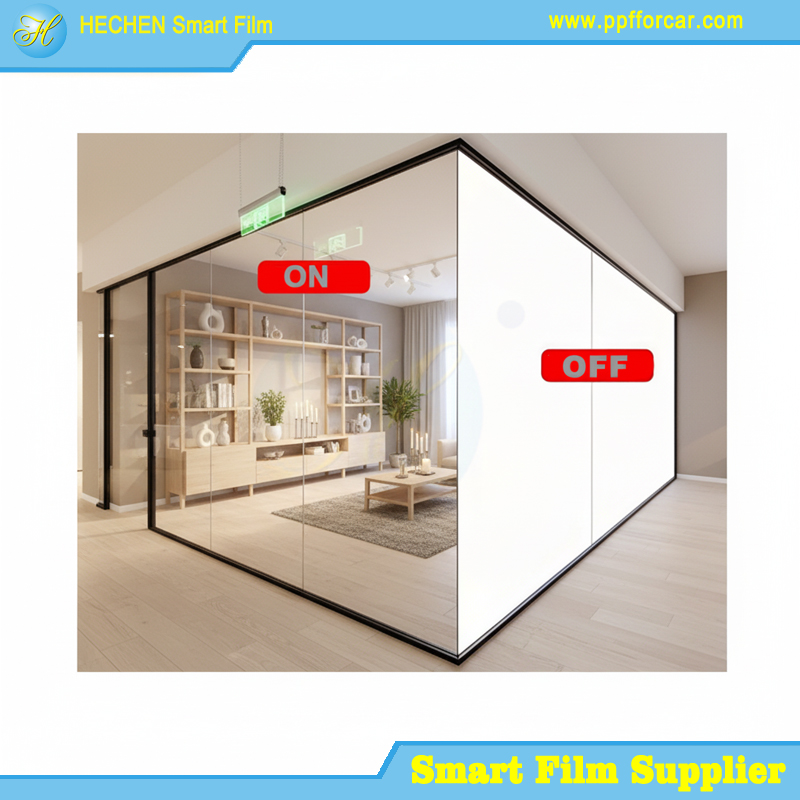
Conclusion
PDLC switchable film has emerged as the premier solution for office partitions that demand both transparency and privacy. By transforming ordinary glass into an intelligent surface that responds instantly to user needs, it enables the open, collaborative environments that modern offices strive for while providing the confidentiality and focus that work requires.
When selecting PDLC film for office partitions, prioritize optical clarity in the transparent state, uniform performance in privacy mode, reliable switching, and durability. Consider the appropriate solution—self-adhesive retrofit or laminated smart glass—based on your budget, timeline, and long-term objectives. Plan control options that align with how your space will be used, from simple switches to full building management system integration.
With careful selection and proper installation, PDLC film delivers instant privacy at the flick of a switch, transforming glass partitions from a limitation of open office design into a versatile asset that enhances both collaboration and concentration. In a workplace where flexibility is paramount, this technology empowers spaces to adapt instantly to the people who use them—creating offices that work as dynamically as the teams within them.
For more about Instant Privacy at the Flick of a Switch: Best PDLC Film for Office Partitions. Everything you need to know, you can pay a visit to https://www.ppfforcar.com/product/PDLC-Smart-Film/ for more info.