PDLC Smart Film vs Smart Glass: Which One Should You Choose?
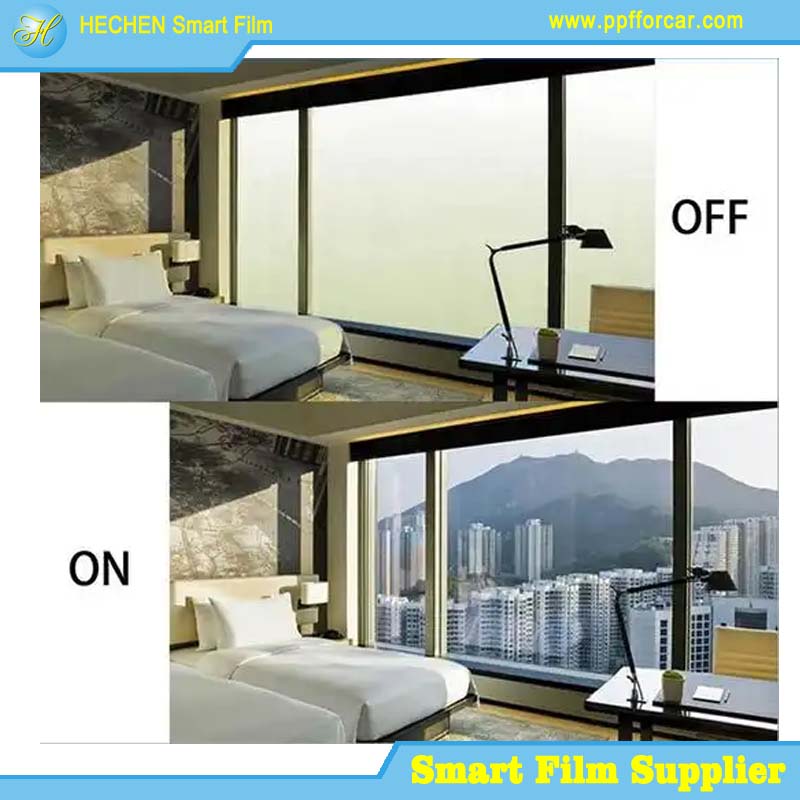
PDLC smart film and smart glass represent two practical implementations of the same core Polymer Dispersed Liquid Crystal (PDLC) technology for on-demand privacy control. Both solutions enable existing or new glass surfaces to switch rapidly between an opaque (frosted) state that blocks visibility while still transmitting diffused light and a transparent (clear) state that allows full visibility. The fundamental difference lies in their physical construction and integration method: PDLC smart film is a thin, flexible retrofit layer applied directly to the surface of existing glass, while smart glass consists of a complete laminated panel where the PDLC layer is factory-sealed between two rigid glass sheets.This technical comparison analyzes the two options across key characteristics—construction, installation, optical performance, power requirements, durability, cost, maintenance, and application suitability—to provide engineers, architects, facility managers, and homeowners with objective data for decision-making. No specific brands or models are referenced; the analysis draws from universal engineering principles and performance metrics common to PDLC-based systems. Both technologies operate on low-voltage AC electricity (typically around 60 V at 50/60 Hz) and consume minimal power (approximately 4–6 W/m² in the transparent state), making them energy-efficient for privacy rather than solar control. The choice ultimately depends on whether the project involves retrofitting existing glass or specifying new glazing, budget constraints, environmental exposure, and long-term performance expectations.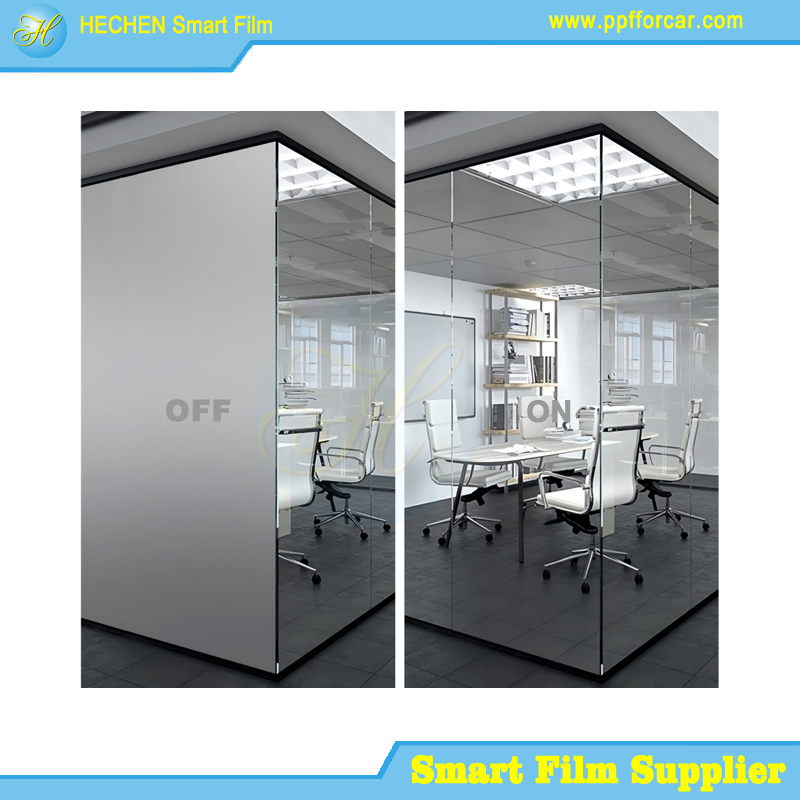
Understanding the Underlying PDLC TechnologyAt the molecular level, both PDLC smart film and smart glass rely on a polymer matrix containing microscopic liquid crystal droplets (typically 1–10 micrometers in diameter) sandwiched between transparent conductive layers, most commonly indium tin oxide (ITO) coated on polyethylene terephthalate (PET) substrates. In the default “off” state with no voltage applied, the liquid crystal molecules remain randomly oriented. Their refractive index mismatch with the surrounding polymer causes light scattering, resulting in a milky-white opaque appearance with visible-light transmittance dropping to roughly 5–20 % and high haze (70–80 %). This state provides effective privacy by obscuring shapes and details while still allowing ambient light to pass through, reducing the need for curtains or blinds.When an alternating current electric field is applied, the liquid crystals align parallel to the field lines. Their refractive indices match the polymer matrix, enabling direct light transmission with visible-light transmittance rising to 80–85 % or higher and haze falling below 5 % in high-quality implementations. The transition occurs in milliseconds (typically under 100 ms), producing a near-instantaneous and uniform switch without mechanical parts. Power is required continuously to maintain the transparent state; removing voltage instantly reverts the material to opaque. This binary behavior distinguishes PDLC from electrochromic technologies, which offer variable tinting rather than full opacity.The PDLC layer thickness is similar in both products—approximately 0.1–0.5 mm—but the surrounding structure determines overall robustness. Both systems include pre-attached copper bus bars along the edges for uniform voltage distribution. Electrical safety is straightforward: low-voltage operation eliminates shock hazards when properly wired, and systems integrate easily with switches, timers, sensors, or building automation protocols. However, prolonged DC exposure must be avoided, as it can cause ion migration and permanent degradation of the liquid crystal layer. These shared technical foundations mean that switching speed, power density, and basic privacy performance are nearly identical; differences emerge in how the PDLC layer is protected and integrated with the glass substrate.Construction and Physical CharacteristicsPDLC smart film is engineered as a standalone, flexible sheet. It consists of the PDLC core encapsulated between two thin ITO-PET layers, with a pressure-sensitive adhesive coating on one side and a protective release liner. Total thickness is typically 0.3–0.5 mm, adding negligible weight or bulk to existing glass. The film remains exposed on the interior surface after installation, requiring careful edge sealing with neutral-cure silicone to prevent moisture ingress into the PDLC layer. This construction enables easy cutting and shaping on-site but leaves the conductive and liquid crystal components vulnerable to physical abrasion, chemical exposure, or delamination at the edges.In contrast, smart glass is a factory-laminated composite: the PDLC interlayer is permanently bonded between two sheets of tempered or laminated safety glass (usually 3–6 mm each), with optional additional interlayers for impact resistance, UV filtering, or acoustic damping. Overall panel thickness ranges from 6 mm to 12 mm or more, depending on configuration (single laminate, insulated glass unit, or double-glazed). The PDLC layer is fully encapsulated and protected by glass on both sides, creating a monolithic, sealed unit that behaves like standard architectural glass. This lamination process occurs under controlled clean-room conditions with autoclave or vacuum pressing, ensuring bubble-free integration and superior optical uniformity. The result is a heavier, more rigid product that can incorporate edge deletions for bus-bar concealment and meet building codes for safety glazing, hurricane resistance, or fire ratings—features impossible with surface-applied film.These structural differences directly affect handling: film can be rolled for shipping and unrolled on-site, while smart glass ships as rigid panels and requires glazing expertise for framing. Thermally, both exhibit similar solar heat gain coefficients because the PDLC layer itself does not block infrared; however, smart glass can be paired with low-E coatings or insulated glass units for better overall energy performance.Installation Methods and Retrofit CapabilitiesInstallation highlights the retrofit advantage of PDLC smart film. The dry-application process involves thorough glass cleaning with isopropyl alcohol, precise measurement (film cut 1–2 mm undersized), gradual release-liner removal, and roller consolidation to eliminate air pockets. Edge sealing follows immediately. The entire procedure can be completed by skilled DIY users or small teams in hours, with no need to remove or replace the original glass. This makes film ideal for renovation projects where structural changes are impractical or costly. Wiring is surface-mounted or concealed in channels, and the low profile preserves existing window frames.Smart glass installation mirrors conventional glazing. Panels are measured, ordered to exact size, delivered, and set into frames or curtain walls by professional glaziers using standard setting blocks, gaskets, and structural silicone. For retrofits, the existing glass must be fully removed, adding demolition, disposal, and potential framing modifications. New-build projects benefit from seamless integration during construction. While more invasive and time-consuming, the process yields a factory-guaranteed, uniform result without on-site adhesion variables. Electrical connections are pre-wired at the factory in many cases, simplifying final hook-up to transformers and controls.Cost AnalysisUpfront material costs favor PDLC smart film, often 40–60 % lower per square meter than equivalent smart glass due to simpler manufacturing and no double-glass requirement. Installation labor for film is also reduced—frequently one-third the cost and time of glazing replacement. However, total project economics shift when factoring longevity and performance. Smart glass carries higher initial capital outlay but eliminates future replacement expenses in high-traffic or exposed environments. Film may require periodic reapplication or edge resealing if moisture or mechanical damage occurs, potentially increasing lifecycle costs. Budget-conscious retrofits or temporary installations lean toward film, while premium new construction or long-term commercial spaces justify the investment in laminated glass.Performance Metrics: Optical, Electrical, and SwitchingOptical performance diverges noticeably. In the transparent state, smart glass typically achieves higher visible-light transmittance (up to 85–90 %) and lower haze (<3–5 %) because the laminated structure minimizes surface reflections and ensures perfect parallelism of the PDLC layer. PDLC smart film, being surface-applied, can introduce slight haze (5–10 %) from adhesive interfaces or minor imperfections, though high-quality application keeps this minimal. In the opaque state, both deliver comparable privacy (near-zero visibility) with similar light diffusion.Switching uniformity and speed are equivalent—milliseconds across the entire surface—provided voltage is correctly distributed via bus bars. Power consumption remains low and identical (4–6 W/m² when powered), scaling linearly with area; transformers must be sized accordingly. UV blocking exceeds 98 % in both, protecting interiors from fading. Neither technology provides significant solar heat gain control, so they are privacy tools rather than shading solutions.Durability, Lifespan, and MaintenanceDurability is where smart glass excels. The encapsulated PDLC layer resists moisture, UV degradation, scratching, and impact far better than an exposed film. Laminated construction allows compliance with safety standards and extends operational life to 10–15 years or more with millions of switch cycles. PDLC smart film, while robust indoors, is susceptible to edge delamination, surface scratches, and adhesive failure if seals degrade or cleaning is aggressive. Typical film lifespan is 5–10 years under ideal conditions, with proper voltage regulation and daily off-cycling recommended to rest the liquid crystals.Maintenance for both is straightforward: power-off cleaning with microfiber cloths and mild solvents. Film requires more frequent edge inspection and silicone touch-ups; smart glass needs none beyond standard glass care. In humid or exterior-adjacent applications, film is generally unsuitable without additional protective glazing, whereas smart glass can be specified for double-skin facades or wet areas.Application Scenarios and SuitabilityChoose PDLC smart film when retrofitting existing windows, partitions, or shower enclosures in residential or light commercial settings. It shines in budget renovations, historic buildings where glass cannot be replaced, or projects needing rapid deployment. Interior office dividers, conference rooms, and residential privacy screens benefit from its flexibility and lower cost.Opt for smart glass in new construction, major renovations, or high-end commercial, hospitality, or healthcare environments. Its superior durability, aesthetics, and code compliance suit curtain walls, storefronts, skylights, or security-sensitive areas. Hospitals, banks, and luxury residences often specify laminated panels for seamless integration and long-term reliability.Hybrid approaches exist: film for quick interior upgrades and glass for exterior or high-exposure zones. Neither replaces traditional blinds for complete blackout; both allow light passage even when opaque.Safety, Energy Efficiency, and Environmental FactorsBoth systems operate safely at low voltage and pose no fire or structural risks when installed correctly. Smart glass offers inherent safety-glass ratings, enhancing fall protection. Energy-wise, the minimal wattage supports sustainable design, though neither reduces cooling loads significantly without supplementary low-E glass. Environmentally, smart glass uses more raw material but lasts longer, potentially lowering embodied carbon over decades. Film’s lighter footprint suits circular-economy retrofits.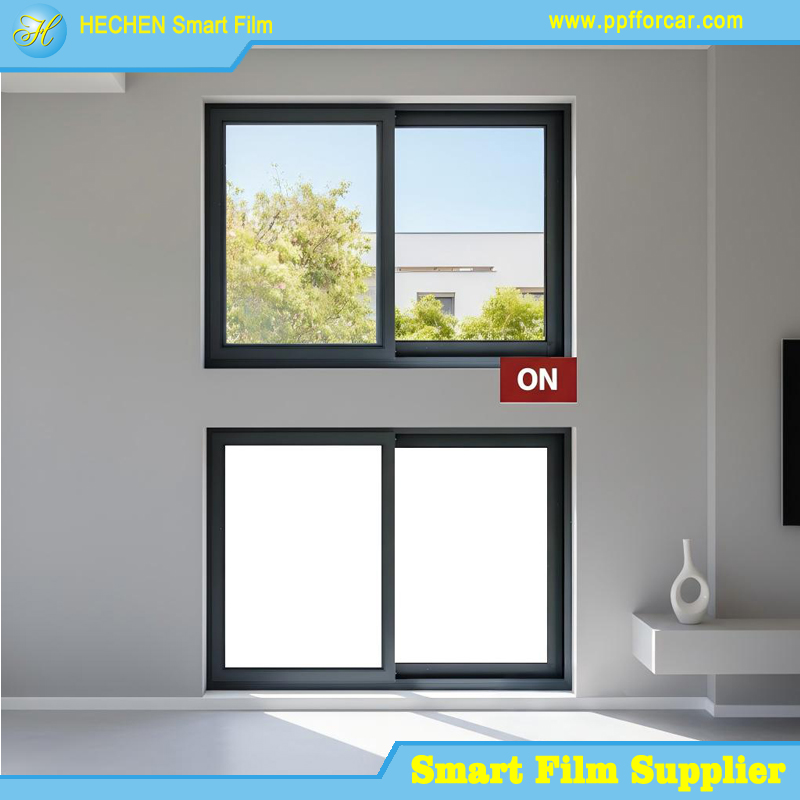
Conclusion: Making the Informed ChoicePDLC smart film and smart glass deliver identical core functionality—instant, electricity-controlled privacy—yet differ profoundly in construction, durability, installation, and total ownership cost. Film provides an accessible, retrofit-friendly entry point with lower upfront investment, ideal for existing structures and budget-driven projects where moderate lifespan and indoor use suffice. Smart glass delivers premium, protected performance with superior optics, longevity, and integration, justifying its higher cost in new builds or demanding environments.Evaluate your project by asking: Is glass replacement feasible? What is the expected service life? Will the surface face high traffic, moisture, or UV? For quick, cost-effective privacy upgrades on existing glass, PDLC smart film is the practical winner. For enduring, architecturally seamless results in new or high-spec applications, smart glass is the superior long-term investment. In many cases, a site-specific assessment weighing these technical characteristics against budget and timeline will reveal the clear choice. Both technologies advance modern architecture by replacing static curtains with dynamic, elegant privacy control—selecting the right one ensures optimal performance for years to come. For more about PDLC Smart Film vs Smart Glass: Which One Should You Choose? Everything you need to know, you can pay a visit to https://www.ppfforcar.com/product/PDLC-Smart-Film/ for more info.